Showing posts with label cognac. Show all posts

Tuesday, January 3, 2023

Classic Cocktails: the Boulevardier 1934/1929

Yet another drink taken from The Art of the Shim, the history has since been updated to show that its provenance reaches even further back. While in general form this has similarities to the more classic whiskey-based Bouldevardier from 1927, it takes a rather different and softer approach.

Boulevardier 1934/1929
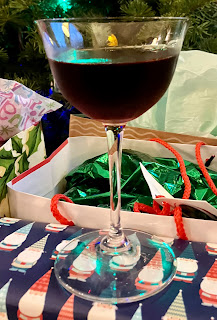
1 oz Dubonnet (sub Punt e Mes)
1 oz kina (Cocchi Americano)
0.5 oz Campari
0.5 oz cognac

Combine all ingredients, stir with ice for fifteen seconds, then double strain into a chilled cocktail glass.

The aromas start off rather closed, but open up as the drink warms. There's a lovely melange of dark raisins, grapefruit, cognac, raspberries, and some dry bitter notes. The sip opens rather sweetly with a bit of a syrupy feel, some grape and raspberry notes right behind, then slides into an unfolding array of gentle bitterness ranging from the dry quinine and wormwood notes to the slightly more astringent Campari. The finish is pleasantly bitter, drawing from the wines and Campari in roughly equal measure, with just enough residual sweetness to keep it from being too much.

As with many drinks in this book, it helps a lot to adjust your expectations. Initially this comes off somewhat like a cold glass of vermouth, but as it sits and warms the other ingredients make themselves known and add complexity. While this won't have the punch of a more spirit-driven cocktail, there's absolutely no lack of flavor here. The form also offers some interesting room to play since I think you could swap the cognac for something like rye or apple brandy to put a new twist on it. Alternatively, swapping the Campari for a different red bitter will dial the overall bitterness up or down.

Friday, March 6, 2020

Cognac Review: Park Extra

And finally we come to the fancy decanter. Which I don't have. This is also one of the few releases in their core lineup that is entirely from one cru rather than being a blend of several.

This expression uses grapes from Grande Champagne, filled into 350 L fresh lightly toasted barrels for twelve months, transferred to used casks, then blended and bottled at 40%, probably with various adjustments and chill filtration. The L13 bottling code on the neck makes me assume that this was put together in 2013, which would be consistent with how slowly specialty bottles move in Oregon.

Cognac Park Extra

Nose: very oak-driven with a balance between fresher and more polished notes, maple syrup, grape and berries in the background, creamy vanilla, mushrooms, charred meat, floral notes, citrus peel, and a touch of tropical fruit. After adding a few drops of water the fruit is amplified and becomes stronger, pushing back on the oak.

Taste: grape sweetness up front, quickly joined by moderately tannic oak, creaminess with a tinge of vanilla, and citric top notes, followed by an oak-y bittersweet fade out with some marshmallow and chocolate. After dilution the fruit up front is brighter and more syrupy, a bit of chocolate comes out around the middle, while the oak becomes mellower and less tannic, the citrus at the back turns into pith and the oak there becomes toasted/charred.

Finish:grape residue, polished oak, lemon/grapefruit peel

This is a return to something closer to the XO Traditional with big oak-driven aromas and flavors right off the bat. With time the aromas unwind and become far more complex, but I never got that from either the flavors or the finish. Given the stratospheric price point on this expression (gotta pay for that fancy packaging!), I would give it a miss.

Wednesday, March 4, 2020

Cognac Review: Park XO Cigar Blend

Cigar blends are one of those slightly anachronistic features of the spirits industry that still appear from place to place. While the pairing has been around for centuries, smoking is falling out of fashion and outright banned in many public places including bars.

This expression uses grapes from Grande Champagne and Petite Champagne, filled into 350 L fresh lightly toasted barrels for twelve months, transferred to used casks, then blended and bottled at 40%, probably with various adjustments and chill filtration. The L13 bottling code on the neck makes me assume that this was put together in 2013, which would be consistent with how slowly specialty bottles move in Oregon.

Cognac Park XO Cigar Blend

Nose: delicate mixed fruit over restrained toasted oak, rich berries, almost sherried grape notes, creamy vanilla, orange peel. After adding a few drops of water it initially shifts closer to the XO Traditional with maple syrup, more overt oak, and sweet grape notes, then the vanilla and berries come back with some floral notes emerging after some time in the glass.

Taste: big grape sweetness throughout, fades into mildly tannic toasted oak with some citrus peel at the back. After dilution the up front sweetness becomes almost piercing, some mixed berries emerge around the middle, while the oak is diminished but becomes more polished and tannic.

Finish: sweet grape notes, mild oak, mixed citrus peel

Contrary to my expectations the oak in this expression is much more restrained, letting the fruitier notes shine through. It may be this is part of the design - if this is going to be complimented by the smoke of a cigar, there is less need for the bass notes of oak. The aromas are fairly engaging, though I found the flavors overly simple. While that still makes it better than the XO Traditional to me, there's absolutely no way I can see this justifying its price tag. It's entirely possible that there's a lot of older eau de vie in here, but I'm just not getting the complexity I would expect at nearly $200.

Monday, March 2, 2020

Cognac Review: Park XO Traditional Réserve

This is something of the odd one out in this lineup since it appears that the expression has been reformulated since this tasting set was released. What was a blend of multiple crus has been reworked into 100% Grande Champagne. Which is all to say that this may not be representative of what you can find now.

This expression uses grapes from four different regions - Grande Champagne, Petite Champagne, Fin Bois, and Borderies, filled into 400 L fresh lightly toasted barrels for twelve months, transferred to used casks, then blended and bottled at 40%, probably with various adjustments and chill filtration. The L13 bottling code on the neck makes me assume that this was put together in 2013, which would be consistent with how slowly specialty bottles move in Oregon.

Cognac Park XO Traditional Réserve

Nose: big polished oak notes, maple syrup, fresh cut grass, a little plastic, mushrooms, vanilla, grape in the background, pink bubblegum, a touch of something floral. After adding a few drops of water the oak becomes even stronger while the other aromas (except for some maple syrup and honey) are largely washed out.

Taste: big grape sweetness with oak tannins underneath, fades out into cedar, bittersweet polished oak, and grape. After dilution the oak becomes stronger but also sweeter, producing an even more uniform progression of flavors through the palate.

Finish: grape sweetness, moderately tannic oak

This is disappointing in exactly the way I would have expected. Once you get above $100, a lot of producers construct their blends around what customers believe an older, more expensive spirit should taste like rather than what it could be. This is basically sweet with a lot of oak, which could be obtained from an entry-level armagnac for a third the price. I still have two more XO expressions to go, but after this I'm not getting my hopes up since it appears they spent even more time in smaller new oak casks.

Friday, February 28, 2020

Cognac Review: Park Borderies

Maison Park has an interesting twist in the middle of their lineup - instead of Napoleon or some other fanciful name to mark the midpoint between their VSOP and XO expressions, they decided to focus on their home region of the Borderies. I find this to be a really interesting opportunity to gain some understanding of how regions influence the different styles of cognac without having to buy a specialty single cask or limited release.

As the name suggests, this is produced from 100% Borderies grapes, filled into 400 L fresh lightly toasted barrels for ten months, transferred to used casks, then blended and bottled at 40%, probably with various adjustments and chill filtration. The L13 bottling code on the neck makes me assume that this was put together in 2013, which would be consistent with how slowly specialty bottles move in Oregon.

Cognac Park Borderies

Nose: classic cognac notes of grape, a little alcohol heat, gently floral, woody baking spices, honeycomb, green apple and pear, ripe berries, citrus peel, and a touch of incense. After adding a few drops of water the honey notes become stronger, the apple and pear become fresher, the oak becomes a little more tannic, but some of the complexity is suppressed amid softer aromas.

Taste: sweet with strong fruity notes of grape, berry, apple, and pear up front, soft oak beginning in the middle and carrying through to the back where it is joined by some floral notes. After dilution the fruit up front becomes stronger but less distinct and returns right at the back, the oak becomes even softer until the very back, and the floral notes are largely quashed until the finish.

Finish: caramel, floral, bittersweet grape, mild oak

This is essentially what I expected the VSOP to be. While there's nothing stunning, it has a solid level of complexity and leans into the floral notes that are a hallmark of its origins. Water shifts it in an even sweeter direction, though I find the loss of complexity to be disappointing. It does make me wonder what this spirit could have been with a higher bottling proof and a little less caramel. With a bit of a punch up I think it could hold its own against single malts in a similar price range.

In a Sidecar the nose is very floral, almost overwhelming the orange notes. The sip opens bittersweet with Seville orange and floral top notes, becoming rather creamy with some lemo around the middle, then fading out somewhat limply. The finish is rather muted with some cognac notes and a bit of orange.

Well, that was a bit disappointing. While this definitely brings floral notes to a cocktail, it doesn't fit in the way that the VSOP did. With that said, I can see this being used alongside a more rounded cognac to bring some floral character without it being all of the base spirit.

Tuesday, February 25, 2020

Cognac Review: Park VSOP

As with most cognac houses, Park's VSOP expression is the next step up from their entry-level VS (though they also have an Organic Fins Bois that is comparably priced).

In keeping with the upgraded profile, the VSOP is constructed from 40% Fins bois, 40% Petite Champagne, and 20% Grande Champagne grapes, filled into 400 L fresh lightly toasted barrels for eight months, transferred to used casks, then blended and bottled at 40%, probably with various adjustments and chill filtration. The L13 bottling code on the neck makes me assume that this was put together in 2013, which would be consistent with how slowly specialty bottles move in Oregon.

Cognac Park VSOP

Nose: darker than the VS - caramel, maple syrup, a rounded creaminess, light toasted oak, cinnamon and woody baking spices, a little green grass, gently floral. After adding a few drops of water it shifts towards the oak, grass, and something a little funky (hard boiled eggs?), but it also has even less intensity.

Taste: syrupy maple sweetness up front with both grape and cask character, a little citrus peel around the middle, some grassy/hay notes in the background that grow stronger toward the back, drier but not particular tannic going into the finish. After dilution it becomes softer and sweeter, but less syrupy, with a thick layer of caramel throughout, a floral overlay around the middle, and some mixed fruit with light oak tannins coming out around the back.

Finish: slightly cardboard-y oak, flat grape notes, caramel, lingering vanilla and grapefruit

While this is a clear upgrade from the VS in terms of smoothness and richness, I was somewhat disappointed that there wasn't much of an improvement in complexity. While it's a more engineered product, I think Rémy Martin VSOP is a big upgrade over this.

In a Sidecar the nose is balanced between orange from the liqueur and floral notes from the cognac. The sip opens with grape and orange sweetness, backed up by a touch of aspirin bitterness, then fades into bittersweet orange with some oak tannins at the back. The finish continues the orange notes with some cognac roundness arriving.

That was... not bad. While not the most characterful cognac, the VSOP does manage to hold its own here and keep the weird parts of the Ferrand Curaçao in check. While it's a little expensive for mixing, I'm willing to say that this is a fairly solid pick.

Tuesday, February 18, 2020

Cognac Review: Park VS

Cognac Park has something of a peculiar history. The distillery goes back to 1880 and has been in the hands of the Tessendier family ever since. However, the Park brand was developed as a collaboration between the distillery and Dominic Park, a Scotsman, in 1993. In 2008 the distillery purchased the brand and everything has been in house since then.

While the distillery is situation in the Borderies, Park gets wines from all over the Cognac region to ensure that they have a broad pallet with which to construct their expressions. With the exception of their single region releases, each will be a blend of spirits from 2-4 different regions.

The VS is built from 50% Fins Bois and 50% Petite Champagne, filled into 400 L fresh lightly toasted barrels for six months, transferred to used casks, then blended and bottled at 40%, probably with various adjustments and chill filtration. The L13 bottling code on the neck makes me assume that this was put together in 2013, which would be consistent with how slowly specialty bottles move in Oregon.

Cognac Park VS

Nose: rather faint - alcohol burn, some acetone, grape and barrel sweetness, maybe a touch of something floral and citrus. After adding a few drops of water the aromas shift significantly to vanilla, fresh apples, oak, bright caramel, and a stronger floral note.

Taste: rather sweet up front with caramel and grape carrying through to the back, some fresh apple around the middle, then a touch of oak tannins and some rounder marshmallow notes at the back. After dilution it becomes rounder up front and some more well-defined oak emerges at the back.

Finish: balanced caramel, grape, and oak plus lingering vanilla

This is honestly pretty forgettable at full strength. There's practically no complexity, even compared to stuff like Hennessy or Courvoisier. The only redeeming feature is that there are no overt flaws or off-putting flavors, though I wouldn't recommend spending too much time sniffing it. Water, oddly, pumps it up a bit and reduces the solvent notes in the aromas. Maybe a sign that this was built for mixed drinks? Unfortunately since I only have a miniature I won't be able to find out.

With that said, for the price I would still pick Hardy VS over this.

Friday, February 14, 2020

Cognac Review: Louis Royer VSOP Force 53

Louis Royer Force 53 has a very particular place in my journey in the spirits world. I first heard about it through Cocktail Chronicles singing its praises in pre-Prohibition cocktails. From there it became something of a white whale, a spirit that I could occasionally glimpse on the occasional liquor store website, but never any that would ship to me.

Lo and behold, it randomly appeared in the OLCC system, even at MSRP. I was able to snag a bottle before they disappeared, many years after I had shifted my focus primarily from cocktails to whisky and other spirits.

Louis Royer VSOP Force 53

Nose: rather intense for a cognac, but also somewhat closed - moderately sweet grapes and apples, a thicker layer of fresh French oak, toffee, floral and citrus peel notes in the background. After adding a splash of water it become softer and richer, but almost all of the complexity is lost among a wave of caramel, with just some basic grape notes in the background.

Taste: sweet up front with thick grape, caramel, and oak notes, some citrus peel (mostly orange) in the background, shifting towards more tannic oak, vanilla, and a touch of chocolate around the middle, with some heat towards the back. After dilution it becomes thick and rich with almost none of the original heat, but most of the progression and development is lost in a wash of caramel and grape sweetness.

Finish: alcohol heat, moderately tannic oak, grape

This does what it says on the label - it takes a fairly standard cognac profile and amps it up with a higher bottling proof. Compared to the Rémy Martin from earlier this week, the next most noticeable difference is how much more oak influence is in this spirit.

It seems fairly clear to me that this is built primarily for cocktails. The features that make it somewhat brash and unrefined at full strength are the same ones that help it stand up against other formidable ingredients in a mixed drink.

In a Sidecar the nose is dominated by woody and floral notes from the cognac, with backing orange peel. The sip opens with strong cognac notes, with slowly growing orange notes into the middle, then more tart lemon near the back. The finish is long with tannic notes on top of lemon and bitter orange peel, plus a touch of vanilla.

Now this is more like it. While the orange liqueur isn't perfect here, the cognac absolutely shines. The higher proof really lets it punch through the other elements, keeping itself in the fore despite the strong character of the liqueur and lemon. While Force 53 isn't cheap, it is absolutely worth the extra expense for the way it can stand up to the strongest ingredients. This will take almost any drink calling for cognac to the next level as it has a lot of what makes bonded bourbons and ryes spirits that bartenders have been reaching for all through the cocktail renaissance.

Tuesday, February 11, 2020

Cognac Review: Rémy Martin VSOP Revisited

Looking back, Rémy Martin VSOP was the earliest cognac I looked at as a sipping spirit. While I haven't gained a ton of experience since then, it is the kind of thing that I'd like to return to to see how my own palate has changed.

As Josh aptly put it, this is the Johnnie Walker Black Label of cognacs. While Rémy is not on the same level as Hennessy, it sits squarely among the second tier of producers along with Courvoisier and Martell. This gives it the depth of stock needed to produce something with broad appeal and consistency.

Rémy Martin VSOP

Nose: big notes of apple and pear, grapefruit, lemon, and orange, mild grape, vanilla, and oak in the background, vague floral and vegetal notes, a little caramel. After dilution it becomes a little muted and less complex, but more vanilla and grape come out, plus something soapy.

Taste: sweet caramel with some grapefruit bitterness up front, a little oak and something floral starting around the middle, then even more mixed citrus going into the finish. After dilution the grapefruit retreats, it's a little sweeter and more oak-y with some berries around the middle, but the flavors become more muddled.

Finish: grapefruit peel with a citric tang, mild oak, caramel and grape roundness, long but not particularly strong

The nose is absolutely the winner here. If you're looking for a fruit-forward cognac, Rémy Martin has you covered. The turn towards more bittersweet notes in the palate and finish gives it something of a moreish quality if you alternate between sniffing and sipping. While not overly punchy at 40%, it still manages a respectable weight throughout. Overall this is heads and tails above the VS cognacs I tried a few weeks ago and might even edge out Pierre Ferrand Ambre in my estimation. Especially if you're just getting into the category, you could do far worse than this.

With all of that said, I still feel like this is a slightly over-engineered product. While technically flaw-less, I have to wonder what it would be like if the spirit was given a little more room to shine. While I do appreciate the lack of intrusive oak in this expression, which is a pleasant change of pace in a mass-market spirit, but it's lost something of the edge that I think it could have had. The Dudognon I tried a while might be close since it also has a strong fruit and citrus profile but isn't tampered with in the way this one is.

In a Sidecar the nose is pleasantly balanced between the cognac and orange liqueur, with some floral notes and just a bit of lemon and baking spices. The sip begins with moderate sweetness, once again balanced between the cognac and the orange liqueur, rounded with some nice thickness from the lemon juice around the middle, then a sharper and more tart fade out into the finish along with some less pleasant bitterness. The finish continues, with light bitterness.

While this is pleasant enough, Rémy doesn't have quite enough heft to stand up on its own. Different proportions might do the trick, but I wanted to be more consistent about my recipe when comparing different cognacs. However, I stand by my original assessment of it that this is a fine cognac for mixing, even if it's a bit on the expensive side.

Friday, January 31, 2020

Cognac Review: Courvoisier VS

Courvoisier something like the fourth largest cognac house by sales volume, but its prominent placement in some critical hip-hop tracks of the 90s mean that you have almost certainly heard of it before. They're also known for having invented the Napoleon classification for cognac, though that doesn't get much play here in the States.

Me? I just want to know if it's any good.

Courvoisier VS

Nose: graham crackers, clover honey, creamy grape notes, apples and pears, gently floral. After adding a few drops of water the honey notes diminish, the oak becomes spicier, and the graham crackers disappear.

Taste: moderate grape and caramel sweetness throughout, vague floral and fruity notes around the middle, very gentle oak, vanillin, and cardboard bitterness at the back. After dilution it remains roughly the same, but maybe with a bit more grape sweetness.

Finish: smooth grape and cardboard, creamy vanillin, dried flowers

Much like the Hennessy, this is at best OK. There are some more interesting notes here, especially on the nose, but nothing especially engaging. Maybe a cocktail will bring out some more?

In a Sidecar the nose is dominated by the curaçao, with some apple and floral notes from the cognac. The sip opens with sweetness balanced by the lemon, some caramel and floral notes emerging around the middle, then a slightly bitter fade into the back. The finish is rather muddled with caramel, unpleasant floral notes, and cardboard-y orange notes.

This is both better and worse than the Hennessy. There are a few more redeeming features, but taken as a whole it is somewhat less pleasant. The floral notes really stand out, but become twisted and kind of gross. Busta Rhymes lied.

Wednesday, January 29, 2020

Cognac Review: Hennessy VS

If you've heard of cognac, you've probably heard of Hennessy. The biggest brand in terms of sales, they're part of the luxury powerhouse Louis Vuitton-Möet-Hennessy (LVMH). They sell somewhere around 50 million bottles a year, which is roughly as much as the next three big houses put together.

I will leave the history to Cognac Expert, since all that matters to me is that this is a very popular cognac. The question is why?

Hennessy VS

Nose: very fruity - fresh grapes, berries, apples, pears, artificial caramel, a hint of oak, slightly floral and minty. After adding a few drops of water the fruitiness is enhanced, but it remains largely the same.

Taste: caramel sweetness throughout, mixed fruit in the middle, becoming more bittersweet on the back end. After dilution the fruitiness expands through the palate, but the caramel color bitterness at the back increases.

Finish: fruity notes return, bittersweet caramel with an artificial edge

It feels like there's some decent eau de vie under all of that caramel, but it's not too easy to find. It's pretty OK neat, but nothing exciting. Maybe it will do better in a cocktail?

In a Sidecar the nose is dominated by the curaçao, with vague hints of fruit (pineapple?) and caramel from the cognac, plus something floral as the drink warms up. The sip begins fairly muted with what might be some caramel and vanilla, opening up into some orange in the middle, then getting lost in a muddle of caramel from the cognac. The finish is more of the same and can only be described as extremely disappointing.

Wow, that was just... bad. There may be other drinks in which this works better, but a sour is clearly the wrong choice. All of the worst parts of the cognac are on display with none of its virtues to make up for it. Unfortunately this is so bad that I'm not sure I want to explore its uses elsewhere.

Thursday, November 15, 2018

Cognac Review: François Giboin 22 Year 1995/2017 Borderies

Giboin is a small cognac house with vines located in the Fins Bois and Bordaries regions. It has been family owned since 1830 and produces no more than 4000 cases a year. They use different amounts of lees (the solids remaining after fermentation) depending on how long the spirit will be aged for - younger cognacs are distilled without lees to give a cleaner product, while more lees are used for cognacs destined to age for longer periods of time to give a more complex product.

This particular cognac is a single cask distilled from 100% ugni-blanc grapes in 1995 and bottled in 2017 at 44% without coloring or chill filtration for Astor Wines.

François Giboin 22 Year 1995/2017 Borderies

Nose: marshmallow, vanilla, whipped cream, cotton candy, caramel, fresh and baked apples, banana, baking spices, uncooked pie crust, floral. After adding a few drops of water it shifts into a slightly drier mode with more oak, some citrus (lemon), and subdued sweet notes

Taste: rather sweet and thick up front, maple syrup, berries, grapes, floral background, mild oak underneath, not a lot of development. After dilution it becomes creamier with a little more oak

Finish: a little distant, cognac grape-iness, dried flowers, slightly drying oak

Much like the Dudognon, the bulk of the action here is in the aromas. If you're content to sit and sniff, this has quite a bit to offer. While a lot of the descriptors I gave are very sweet, I didn't find it cloying. The flavors are good if simple and this could be a pleasant sipper to enjoy with a book, but you would miss most of the action that way. Also like the Dudognon, the lack of adjustments is clear. While this is a sweeter cognac, it's cleaner than the thicker sweetness you're likely to find in more mainstream releases. Overall, while I think it could offer a bit more complexity for the money, this was a solid cask pick by Astor.

Monday, November 12, 2018

Cognac Review: Dudognon Vieille Reserve Grande Champagne

The Dudognon family have been growing grapes in the Grande Champagne region since 1776. While they sell some of their limited (~200 barrels per year) production to larger houses such as Hine and Remy Martin, they save some of the best to be labeled under their own name. The eau de vie is first distilled to 28%, then redistilled to ~70%. The new spirit is generally put in new oak barrels, then reracked into used casks for further maturation. Contrary to standard practice among cognac producers, their brandies have no additives.

I have seen claims that this cognac has an average age anywhere from 20 to 25 years. It is bottled at 40% without coloring, but possibly with chill filtration.

Dudognon Vieille Reserve Grande Champagne

Nose: dry cognac grape-iness, vanilla extract, maple syrup, honey, grapefruit peel, floral/herbal undertones, sunflower seed oil. After adding a few drops of water the sweeter elements come to the fore and a bit of gentle oak is added to the mix.

Taste: sweet grapes up front, apple/pear/grapefruit right behind, moderate tired oak from the middle back, berry overtones. After dilution it becomes noticeably sweeter up front, the oak becomes a bit brighter, there is a touch of tropical fruit in the background, and the berry notes are stronger.

Finish: light oak tannins, grapes, savory, more grapefruit, pear/tropical fruit, lingering dried flowers

This is something of an odd duck for me. The quality is clearly there, especially in the aromas, but it took a while for me to find this cognac very engaging. It's a little too dry without further dilution to be an easygoing sipper, but the flavors and finish don't quite have the complexity to reward studied engagement. While it's not flabby at 40%, I do wonder what the spirit would be like at a higher strength.

With all that said, I'm not sure if it really comes down to the spirit itself or my inability to tease apart its structure. I'm still relatively new to brandy as a category, so I'm not sure I have the experience to break it down in the way that I do with whisky.

I will give them a nod for the lack of boise and other 'adjustments' that are so common in the industry. It doesn't have the syrupy quality I've found in many other cognacs and that alone is a pleasant surprise. I'd like to try more from this producer, though I think I'll want to try before I buy next time.

Friday, March 23, 2018

Cognac Review: Pierre Ferrand Ambre

Unlike many cognac houses, Maison Ferrand doesn't use the standard VS/VSOP/XO designations for their expressions. Ambre sits around the same price point as most VSOPs from other cognac houses, so that seems like the best way to evaluate it.

This cognac is bottled at 40% with coloring (and other 'enhancements') and probably chill filtration.

Pierre Ferrand Ambre

Nose: classic cognac notes of fresh grapes, apples/pears, and raisins, floral overtones, gentle oak in the background, vanilla/caramel, clean laundry, molasses, orange peel. After adding a few drops of water the grape and molasses notes become stronger and more rounded and the orange peel turns into lemon.

Taste: sweet grapes and caramel throughout, light floral overtones in the middle, becomes slightly bittersweet near the back with oak tannins. After dilution it becomes thicker, sweeter, and flatter, but the flaws at the back mostly disappear

Finish: a little bit off - slightly sour and musty/dusty grapes and caramel

After quite enjoying their older Réserve, I had fairly high hopes for this cognac. But as a sipping spirit it never really came together for me because the palate never lived up to the aromas. Much like mass market blends, it feels like the spirit has been smothered in an effort to create something with broad appeal. It's a perfectly fine choice for making cocktails, but their 1840 release is going to be an even better choice if you're looking to mix. Still, let's see how it does.


Vieux Carré

1 oz rye whiskey
1 oz cognac
1 oz sweet vermouth
1/2 tsp Bénédictine
2 dashes Angostura bitters
2 dashes Peychaud's bitters

Combine all ingredients, stir with ice for fifteen seconds, then strain into a chilled cocktail glass.

The nose is driven by grape notes from the cognac and vermouth, with vanilla from the vermouth and rye, plus herbal notes from the Bénédictine. The sip begins with grape sweetness balanced by oak tannins, runs through creamy vanilla in the middle, and fades out through increasing bitterness at the back.

This is easily one of my favorite Manhattan variations because the small tweaks create a much more complex drink. The fairly wet recipe with a touch of liqueur is brought back into balance with an extra doses of bitters. Unless you use a high proof cognac like Louis Royer Force 53, the end result is going to be softer than a traditional Manhattan. Pierre Ferrand Ambre does a respectable job here, which is helped by the fact that the bitters cover up its deficiencies in the finish.

Monday, November 10, 2014

Book Review: Cognac - by Nicholas Faith

This book is part of the Mitchell Beazley Classic Wine Library, an encyclopedic series.

Published in 2004, it presents both the history of cognac and its then present state, as the spirit slowly began to struggle out of one of its nadirs. The author is a British financial journalist who frequently writes about wine as well and has published a number of other books on the subject.

The first section of the book provides a fairly comprehensive and detailed description of the elements that go into making cognac - the land, the grapes, the fermentation, the distillation, and the aging process (with an extended discussion of the sources of wood for casks). It was interesting to compare and contrast these processes with the spirits I know better - scotch and bourbon.

The bulk of the book is taken up with a history of cognac - the people and events who have shaped its creation over the centuries. There is a significant focus on the shifting relationships between the different levels of production - the growers, small producers, middlemen, and large houses that have more recently come to dominate the market. A lot comes down to the tension between what is good for individuals - growers or the heads of cognac houses - and what is good for the industry as a whole. The last portion - what was recent history at the time of writing - is interesting as it was a low point for cognac. The government was encouraging growers to pull up their vines and plant different crops, as the ebbing demand for cognac in the 1980s and 1990s had produced a major glut of wine, only a small portion of which was actually necessary to fulfill projected demand for cognac. Contrasting that with the present situation where demand has gone in the opposite direction, far outstripping supply, goes to show how difficult trends are to predict.

There is a period of unintentional levity when the British author attempts to speak about African American culture, specifically hip-hop, and its growing ties with cognac. He clearly does not quite understand his subject and reveals it with awkward phrasing such as 'rapsters'.

Finally, there is a section about how to enjoy cognac. While covering some well-worn territory, this also speaks to both the author's own biases and the trends of the time when he devotes a significant number of words to promoting cognac in long drinks as the solution to producers' woes. This is slightly funny from the perspective of a decade on, when the appreciation of neat spirits is enjoying a renewed appreciation. Again, trends are difficult to predict.

Overall, if you would like to gain a better understanding of cognac, both its production and history, this is a book I would recommend. The writing is generally engaging, providing enough depth without getting completely lost in the weeds. The simple black & white printing also ensure that it is a relatively cheap book, unlike many of the glossy coffee table books that are currently being published about spirits.

Friday, May 30, 2014

Cognac Review: Hardy VS

The Hardy cognac house was founded by an Englishman, Antoine Hardy, in 1863. It has stayed in the family's hands over the last century and a half. The House of Hardy overlooks the Charantes River, within the town of Cognac.

The VS expression is the youngest that Hardy releases, aged for a minimum of five years in limousine oak casks. It is bottled at the standard 40% and is likely chill filtered, caramel colored, and treated with boise (shavings or powdered oak, to accelerate the extraction of color and tannins).

Hardy VS

Nose: jammy berries, liquid raisins, gentle oak, orange peel, dry-ish grapes, light brown sugar, dark cherries. After adding a few drops of water, it becomes rather floral, which integrates well with the grape notes.

Taste: sweet with grape character throughout, jammy fruit (raspberry/cherry) turning into polished wood with a touch of sawdust in the middle, gently bitter edge, bittersweet fade. After dilution, it becomes flatter and less sweet, the flavors become more indistinct, but some nice bittersweet chocolate overtones show up.

Finish: orange peel, bittersweet floral oak, slightly vegetal, grape residue, a touch of pepper

This is not a complicated cognac, but it is honestly quite enjoyable. Quality-wise, I think this is comparable to a respectable blended whisky - it's not going to make you think too hard, but it's nice to drink. While it's crept up in price here in Oregon, it's still available for about $25 in many places. At that price, it's hard to find a better deal for actual cognac. Additionally, that makes it cheap enough that you don't need to feel a single twinge of guilt about using it for cocktails.

In a Sidecar, it brings everything that you would expect from cognac: nice apple notes, French oak, vanilla, and something a little floral. Paired with Pierre Ferrand Dry Curaçao, I did feel like I either needed to use a bit more cognac or to ease off on the orange liqueur to keep balance. If you're usually a less aggressively orange liqueur, then I wouldn't worry. While it'd be nice if Hardy upped the bottling proof, I've never felt like it wasn't able to assert itself in cocktails.

Japanese Cocktail Variant

2 oz brandy
1 oz lemon juice
0.75 oz orgeat
1 dash Angostura bitters

Combine all ingredients, shake with ice, then strain into a chilled cocktail glass

The nose is redolent of cognac, accented by the bitters and nutty notes from the orgeat. The sip begins with cognac riding underneath subdued lemon, segueing into orgeat, then letting the cognac shine on its own. The bitters don't peek out too much, buttressing the other ingredients instead of pushing out in front. Overall a nice twist on a brandy sour.

Monday, February 4, 2013

Cognac Review: Pierre Ferrand Reserve

Pierre Ferrand is both a very old and a relatively new company. Old, in the sense that the history of Pierre Ferrand stretches back to the late 18th century. New, in the sense that the company was revived in the late 1980s by Alexandre Gabriel, who formed Cognac Ferrand. The company now also produces its own gin, as well as sourcing and aging rums and other spirits.

Located in the heart of the Grand Champagne region - considered one of the best areas for making cognac because its very chalky soils help to retain moisture that keeps the grapes healthy during the long, dry summer months. All of their cognac is double distilled in a small 25 hectoliter alembic still from wine on the lees (the solids are not filtered out before loading the still, which means that flavors are also extracted from the lees). Aging is done, as with all cognac, in limousin oak. A variety of different toasting levels are used in the barrels, which will change the types of compounds extracted by the spirit. The distillery has over half a dozen different locations for aging, all with different ranges of humidity and temperature. All of these give Pierre Ferrand a wide selection of eau de vie to select for blending into their standard expressions.

Their Reserve expression is in the middle of their range, above the younger Ambre expression and below the older Esprit des Dieux. While there's no age statement on it, the number I've seen most often is 20 years old. However, I haven't been able to get anything official and there are conflicting statements about whether that's the average age or the maximum age of the eau de vie going into the blend. Either way, it's definitely mature.

Pierre Ferrand Reserve

Nose: baked spiced and green apples, ripe berries, light floral and honey notes, slightly musty/vegetal, purple/cherry cough syrup, sweet grapes. After dilution, the nose becomes more oily (nut oils?), the cherry notes become more woody, some grassy notes emerge alongside some sweet and salty barbecue.

Taste: up front is lemon and orange peel alongside cane sugar sweetness - both of which continue through the palate, mild oak and pepper aren't far behind, which introduce some bitterness along with mineral notes and hints of grape skins. After dilution, the sweetness is more subdued, with strong pepper that overlaps with the fruit flavors.

Finish: vegetal, musty, bittersweet oak, green apples, grapes, and pepper.

I really enjoy the balance of this cognac. While there is certainly plenty of sweet fruit flavors to go around, the palate is balanced by pepper and bittersweet oak that keep it from going off the rails. The freshness of the flavors is also a pleasant surprise from a spirit with so much age on it.

As a value proposition, I'd say this is a pretty good choice. I was very, very lucky and snagged my bottle for under $40 (the OLCC does some peculiar things). Normally it's more around $70, which isn't cheap, but doesn't seem absurd for a spirit of this quality. I need to try the younger Ambre expression to get a sense of how it compares, as that one is usually around $40. However, if I'm ever able to find a bottle of the Reserve for under $60, I will jump right on it. It's just so nice that I couldn't say no.

Sunday, October 7, 2012

Cognac Review: Rémy Martin VSOP

While I've made brandy-based cocktails from time to time, this is the first time I've really tried to get a handle on cognac as a spirit by itself. Thankfully I was able to pick up a couple of minis of Rémy Martin VSOP from The Party Source for a reasonable price. It's been an interesting exercise trying to dissect what is for me a relatively new and different spirit.

Rémy Martin was founded in 1724 in the Fine Champagne area of the Cognac region in France. As the name implies, the eau de vie for their brandy comes entirely from either the Grande Champagne or Petit Champagne crus (in this case Champagne refers to the chalky soil, rather than the bubbly wine). As with all cognac, the grapes are primarily Ugni Blanc, with smaller amounts of Colombard and Folle Blanche. The wine is double distilled in alembic stills, then aged exclusively in Limousin oak barrels, and finally blended to form the final expressions. The 'age dating' of cognacs is a little fuzzy, but there are some definitions. VS indicates that the youngest eau de vie in the blend is two years old, VSOP indicates that the youngest eau de vie is four years old, and XO indicates that the youngest eau de vie is six years old. In the case of Rémy Martin VSOP, it is a blend of eau de vies ranging from four to fifteen years old.


Rémy Martin VSOP

Nose: brown sugar and raisins over oatmeal, fresh apple juice, slightly floral and vegetal, cinnamon/baking spices, baked apples, pie crust, vanilla ice cream. After adding a few drops of water, the sweetened oatmeal aspect dominates, accented by raspberry jam,  and orange peel.

Taste: moderate raisin and apple sweetness up front, ripe berries, creamy middle, light chili/black pepper heat, baking spices, then a bit of oak, some more fruity sweetness, and some floral notes. After dilution, the palate becomes a bit flatter, though the floral notes retain their previous strength and something almost malty emerges near the back.

Finish: bitter oak, over-ripe berries, a bit of chili pepper, floral, vanilla bean

Overall I found this to be rather pleasant drinking. If it weren't for the raisin notes riding through everything, I'd say that it's not too far away from resembling a sherried Speyside single malt, but the nature of the flavors make it distinct. The vinous notes are more ethereal than what you get with sherry casks (this actually makes me tempted to try aging something like pisco in a sherry-seasoned barrel to see how they interact) and the character of the flavors is simply different in a way that I can't put my finger on just yet.

To test how well this cognac works in cocktails, I went with a classic:

Sidecar

1.5 oz cognac
0.5 oz orange liqueur
0.5 oz lemon juice
0.25 oz simple syrup

Combine all ingredients, shake with ice for six seconds, then strain into a chilled cocktail glass.

The nose is dominated by the orange liqueur, though a spicy note from the cognac peeks through as well. The initial sip has some grape-y sweetness, which is swiftly overtaken by spices and pepper from the orange liqueur and cognac, which fades out with bittersweet orange and oak.

While I can wish that this cognac had a few more percentage points of ABV, it holds its own rather well in a Sidecar. It balances rather well with the orange liqueur, supporting each other without either dominating the drink. The flavors that I found in the neat spirit are still very present, which is nice to recognize.

At least here in Oregon, Rémy Martin VSOP usually runs in the $35-40 range, which is perfectly decent, but not a spectacular deal. I will probably stick to cheaper brandies for making most of my cocktails, but this has encouraged me to poke my head deeper into the world of cognac, as I expect there will be some interesting surprises. There's been a bottle of Pierre Ferrand Reserve sitting forlornly in my liquor cabinet, waiting for my palate to sufficiently evolve, that I will have to revisit.

Tuesday, June 5, 2012

Brandy + Rum = Best Friends Forever

Some spirits are just meant to be together. Rum and brandy come from distinctly different worlds - rum is derived from the waste products of processing a massively mutated grass, whereas brandy is a highly refined spirit made from carefully tended grapes. And yet when put together they can bring out the best in each other.


Kiss at Midnight
0.75 oz aged Puerto Rican rum
0.75 oz cognac
0.5 oz sweet vermouth
0.25 oz cherry Heering
1 dash Angostura bitters

Combine all ingredients, stir with ice for 15 seconds and strain into a chilled cocktail glass.

The nose is dominated by notes of dried cherries from the Heering, with a juicy spiciness from the  interaction of cognac, vermouth, and bitters that reminds me favorably of the Belle Époque. The brandy peeks up behind all of the other elements. The sip leads off without much fanfare, the flavors slowly building to a crescendo across the tongue. The wine notes of the vermouth come in first, followed closely by the cognac. The rum then sallies forth with gusto, leading into sweet and bitter spices from the Angostura and vermouth, finishing with lingering bittersweet chocolate and cherry notes.

While I pulled this together from instinct, it closely resembles the Vieux Carré in form. I wanted a drink using rum, brandy and sweet vermouth. Ron Matusalem Gran Reserva has some cherry notes in it, which made me think of tempering the bitterness of the vermouth with a bit of cherry Heering. Overall I'm rather pleased with how this drink turned out, as it provides a robust, balanced experience that showcases all of its individual elements very nicely. The finish in particular makes it very more-ish as it melds sweet and bitter flavors exquisitely.


Natural Cocktail (from CocktailDB)
1 oz brandy
0.5 oz light rum
0.25 oz lemon juice
0.25 oz grenadine
0.25 oz orgeat (B.G. Reynolds)

Combine all ingredients, shake with ice and strain into a chilled cocktail glass.

The nose presents some interesting notes. Out of the melange, I get a rather distinct whiff of apple juice along with some dark fruit, maybe cherry, from the intersection of the grenadine and orgeat, and just a hint of nuttiness. The sip begins smoothly, without a lot of sweetness, leading into a mild touch of rum. This segues into a burst of different flavors coming in rapid succession - brandy, then subdued lemon juice and finally some slightly bitter nuttiness from the orgeat. The finish contains lingering barrel flavors from the brandy with a bit of fruit - both from the pomegranate and a bit of apple from the spirits.

This drink is a peculiar mashup of the Bacardi Cocktail and the Japanese Cocktail. And yet the elements come together in a rather pleasing fashion. The rum and brandy become something other than the sum of their parts. I picked El Dorado 5 Year rum and Hardy VS cognac because they're both rather fruity examples of their respective spirits. The El Dorado brings a lot of great tropical fruits like mango and passionfruit while the Hardy retains a strong tie to its origins with the grape and wine flavors holding fast against the barrel influence. It's surprising that this is not a particularly sweet drink, given the larger measure of syrups over citrus. Somehow everything stays in tension without becoming a jumbled mess.


Molokai Mule (modified from Remixed)
0.75 oz Demerara rum
0.75 oz gold Puerto Rican rum
0.75 oz Cognac
0.5 oz lime juice
1 oz orange juice
0.5 oz orgeat syrup

Combine all ingredients, shake with ice and pour unstrained into a chilled rocks glass.

The sip begins with the rich rum flavors from Guyana and Nicaragua. The fruit flavors of lime and orange then come in, with a solid finish of Demerara, brandy and orgeat. 

This is one of those drinks that comes very close to the dangerous state of 'muddled flavor profile', but by bumping up the spirits it manages to come together reasonably well. Without that tweak, the drink becomes overwhelmed by the juices. Picking the right spirits is also quite important. I went with Jacques Cardin VSOP brandy as it tends to have fairly strong maple syrup and vanilla flavors, which mesh well with the rums. El Dorado 12 year is my favorite Demerara rum, as it's incredibly rich and will hold its own extremely well in just about any rum-based cocktail. Flor de Caña 7 year is also a rich, well-aged rum that helps to lend the drink some backbone. And most importantly, they all play well together.