Showing posts with label Bunnahabhain. Show all posts

Wednesday, January 8, 2020

Whisky Review: The First Editions Bunnahabhain 22 Year 1989/2012

One of the enduring mysteries when it comes to IB Bunnahabhains is why there are so many casks from 1989 and why all of them seem to have such a low proof. Reddit user Rudd1983 ran an analysis of data from WhiskyBase and found that 1989 is a serious statistical anomaly with almost 5% lower average bottling strength than surrounding years, despite similar average ages. They also pinged the distillery and determined that the filling strength that year was still the common 63.5%, eliminating one possible explanation.

This whisky was distilled in 1989, filled into what I assume was a refill hogshead, then bottled in 2012 at 45.9% without coloring or chill filtration.

The First Editions Bunnahabhain 22 Year 1989/2012 Cask ES010/10

Nose: classic bourbon cask Bunnahabhain - balanced clean malt, caramel oak, fresh vanilla, coastal influence, vague fruitiness, gently floral, lightly herbal. After adding a few drops of water it becomes softer and sweeter, but it loses some intensity.

Taste: fairly sweet up front with a good mix of malt and cask, slightly sour and gently oak-y with a bit of vague fruit from the middle back, creamy vanilla in the background throughout. After dilution it retains roughly the same structure, but the oak is a little softer and there is a pop of fruit around the middle.

Finish: a little cask and malt, gently bitter, then a long savory herbal/coastal fade out with a touch of cacao. After dilution the oak shifts up and the herbal notes fade.

While there's nothing about this cask that jumps out and makes it exciting, it's also a solid example of what time and wood can do for good spirit.  When I first opened the bottle it had some of the cardboard character that I've often found with First Editions releases, but over time it has settled down into something more clearly Bunnahabhain. While it's never going to reach the heights of their sherry cask releases, it's totally respectable and didn't cost me an arm and a leg.

With that said, the palate is something of a let-down after the moderate complexity of the nose and finish, but that can be improved with a little water or easily tweaked with a bit of blending  - sherried Craigellachie or Mortlach would work great or alternatively a bit of Linkwood could boost the floral notes. There are definite similarities to the MoM Bunnahabhain of the same vintage I tried a number of years ago, though that one had a bit more going on. Unfortunately I didn't grab a bottle of that one since I wasn't as much of a fan of this style at the time.

Thursday, November 22, 2018

Whisky Review - Bunnahabhain Mòine

While Bunnahabhain has primarily been known for its unpeated spirit, following a successful experiment with peated malt in 1997 the distillery has been regularly producing peated spirit for a few weeks each year since 2003. This peated malt whisky has generally been known as Mòine, occasionally appearing on independently bottled releases over the last ten years or so. More recently the distillery started releasing its own whisky under that name, without any age statement.

This whisky was aged in ex-bourbon casks, then bottled at 46.3% without coloring or chill filtration.

I tried this as a purchased sample from WhiskySite.nl

Bunnahabhain Mòine

Nose: lots of young, dry, spicy peat, a little sour (yogurt?), overripe oranges, green malt, seaweed, very light oak, a little vanilla. After adding a few drops of water it peat becomes softer, but it remains largely unchanged.

Taste: strong malty sweetness up front, fairly hot throughout, berry overtones starting around the middle, moderate oak and young peat at the back. After dilution it remains more or less the same, but with less heat and a thicker body.

Finish: light peat, sweet malt, slightly astringent oak tannins

This is... OK? There's nothing particularly wrong if you enjoy younger heavily peated single malts, but by the same token there's nothing about it that stands out compared to other entrants in the field. It makes me want to try Ceobanach, which is nominally the same spirit aged for at least ten years, which would hopefully push it closer to its stablemate Ledaig 10 Year.

Monday, November 19, 2018

Whisky Review: Bunnahabhain Stiuireadair

Bunnahabhain is one of the Islay distilleries that used to have an extremely compact product line, much like Laphroaig. There was a 12 Year, an 18 Year, a 25 Year, and the occasional special release at a higher age. More recently they have been radically filling out the price spectrum, largely with NAS malts. Perhaps sensing that they needed something to bring in new customers who weren't willing to splash out for their more standard 12 Year, Stiùireadair comes in at a more manageable 30-odd euros.

This whisky was aged in first-fill sherry casks, then bottled at 46.3% without coloring or chill filtration.

I tried this as a sample from WhiskySite.nl

Bunnahabhain Stiùireadair

Nose: rich sherry overlaid on young-ish green malt, vanilla, milk, orange peel, American oak, slightly floral. After adding a few drops of water the sherry retreats a bit in favor of creamier malt and a little more oak

Taste: sweet sherry with a fair amount of heat up front, clean malt in the background, becomes more bittersweet with a little oak towards the back, but remains uncomplicated. After dilution the structure remains more or less the same but with less heat, brighter sherry up front, and more sherry bitterness at the back.

Finish: thin - sherry, malt, oak

If this is meant to be competition for the OB 12 Year, it fails. It might be more overtly sherried, but it doesn't have the intensity or complexity to stand up. As an entry-level malt it may be more successful, but I'm still not sure it's a particularly compelling experience, even at that price point. Maybe if this was released at 50% or batch strength it would have a bit more to offer, but as is I would give it a pass.

Monday, March 26, 2018

Whisky Review: Scott's Selection Bunnahabhain 16 Year 1988/2004

Scott's Selection is a now-defunct independent bottler that was owned by the former master distiller for the Speyside Distillery. They have the dubious honor of having bottled quite a number of well-regarded whiskies, but also of being frequently noted as shelf turds during the early-2010s as bottles released in the early-2000s remained firmly on shelves, often at their original prices.

This particular whisky was among them, as it was still available at Binny's until a few years ago when the discounts finally became deep enough for some of us to go in on a split. You can find Michael Kravitz's and MAO's reviews from the same bottle.

This whisky was distilled in 1988, filled into an unknown cask(s?) (maybe refill sherry and ex-bourbon?), then bottled in 2004 at 53.8% without coloring or chill filtration.

Scott's Selection Bunnahabhain 16 Year 1988/2004

Nose: fairly cask-driven, mild fruity (sherry?) overtones, fresh berries, a solid but not overwhelming layer of American oak, orange and lemon peel, malt and vanilla in the background. After adding a few drops of water the fruit/sherry notes become much stronger, dominating the aromas.

Taste: balanced berries/fruit and malt sweetness up front, a bump of American oak with apple and orange overtones in the middle, a slightly hollowness near the back, then more aggressive oak tannins going into the finish. After dilution the berries become stronger up front, with a mild sourness starting in the middle and reduced oak tannins at the back.

Finish: a sort of fizziness, solid American oak tannins, dry malt, sherry residue, honey

While this is a little bit raw, it's still pleasantly engaging. I think it was a wise choice to bottle this cask at a relatively young age, because the wood was starting to get the upper hand and it could have gone over the edge after a few more years. Another possibility is that, since this is technically not labeled as a single cask, a more restrained refill ex-sherry cask was combined with a more active first-fill ex-bourbon so that this came out somewhere in the middle. Overall it's a nice but uncomplicated whisky that I wish I had a whole bottle to myself. It drinks easy for something of this strength.

Monday, June 19, 2017

Whisky Review: Whisky-Doris Bunnahabhain 33 Year 1980/2013

Until fairly recently Bunnahabhain didn't command a lot of attention for an Islay distillery. Its revival is due to two things: the reformulation of its core malt, especially the 12 Year, and a tidal wave of independently bottled single casks at extremely reasonable prices for their age and quality. This upsurge has finally pushed them into the kinds of stratospheric prices that are seen from other more famous distilleries (see: the OB 25 Year and older releases), but there are still a fair number of deals out there simply because the distillery produces so much whisky and sells so much to blenders and IBs that some of them end up being priced competitively. I purchased this one as a thesis bribe after reading a glowing review from Michael Kravitz to get myself to finish my PhD and celebrate when the dissertation was turned in.

This whisky was distilled in May 1980, filled into a sherry butt, then bottled in November 2013 at 45.6% without coloring or chill filtration.

Whisky-Doris Bunnahabhain 33 Year 1980/2013 Cask # 92

Nose: Strong floral sherry notes over a malty core, raisins, malmsey madeira, green herbs, yeast/savory notes, a nice level of American oak in the background, vanilla, butterscotch/cream frosting, a touch of smokey incense. After adding a few drops of water it falls a little flat, with the malt moving forward and the sherry and oak retreating significantly, plus a kind of dusty overlay on it all.

Taste: bittersweet sherry up front with a solid backing of oak tannins/American oak, mint, vanilla, and orange peel in the middle, not a lot of development until the finish. After dilution the sherry gets brighter, clean malt comes out, and the oak is pushed back significantly, but the alcohol becomes more apparent.

Finish: Ben Nevis-y savory herbal notes, fresh mint, citrus, light tobacco/cigar, flowing through American oak, a little molasses, sherry residue, and fading out through clean Bunnahabhain malt and more mint. After dilution the savory herbal notes become dominant and spread out over the experience, pushing a lot of the development aside, and leaving a hotter/ethyl note rather than the pleasant minty fade.

This is a peculiar whisky in many respects. I think Whisky-Doris chose to bottle it at the right time, both because the spirit was on the edge of being overwhelmed by the cask and had hit a significantly reduced but not weak strength. The flavors are unlike anything else I've ever experienced, with not too much happening on the tongue, but an array of complex notes that unfold after the whisky is swallowed. While I didn't like it too much with extra water, this may be because I'm writing the review from the last few pours of a bottle that has been open for roughly a year. With that said, undiluted it still had plenty of power and this has held up better than a sherried whisky has any right to. I'd say it's been diluted by time to an almost perfect strength and any more water breaks its perfect poise.

Friday, March 11, 2016

Whisky Review: Chieftain's Bunnahabhain 16 Year 1997/2014 for K&L Wines

Since the distillery switched to using almost exclusively unpeated malt in 1963, Bunnahabhain has been known for being the lighter side of Islay.

That changed in 1997 when the distillery produced an experimental run with heavily peated (38 PPM) malt. As with Caol Ila's opposite experiments with unpeated malt, it was carried out during the depths of the whisky rut, so it seemed like a one-off until the distillery was purchased by Burn Stewart in 2003. The new owners directed the distillery to start producing whisky from peated malt more regularly and it now constitutes about 1/12th of their annual output.

Many of the casks from the 1997 run found their way into the hands of blenders and independent bottlers, who have been sporadically releasing it over the last decade or so.

This whisky was distilled in August 1997, aged in an ex-bourbon hogshead #3181, then bottled in May 2014 at 56.1% without coloring or chill filtration for K&L Wines.

While initially priced at $130, few seemed to be biting at that point. So it was finally discounted to below $100, which seems to have been enough to get it to sell out. Thankfully I was able to split a bottle with Michael Kravitz, whose review you can read here.

Chieftain's Peated Bunnahabhain 16 Year 1997/2014

Nose: sweet Iberico ham rides over thick oak, an undercurrent of berries, seashore, and dry malt, pine resin and cedar, mossy peat smoke, motor oil

Taste: sweet oak up front, shifting towards bittersweet oak and chocolate across the palate, malt underneath, fennel and dried herbs around the middle, mossy peat shows up around the back augmented by barrel char, fruit and berry overtones throughout shading towards raisins and sherry near the back,

Finish: sweet malt, fresh mossy peat, barrel char, polished oak tannins, raisins, chocolate, sherry

This is one of the whiskies that proves Bunnahabhain can make peated whisky with the best on Islay. Despite their tall stills designed for light, delicate spirit, this is still a full-bore peat blast after a decade and a half in the cask. This is, however, one where you really need to enjoy some serious oak impact. While it's not stated, I'm guessing this was a first-fill hogshead, since there is plenty of tannins and other wood goodies to go around. In some respects this reminds me of recent releases of Laphroaig 10 Cask Strength, which were also dominated by oak. But for some reason, the Bunnahabhain works better.

Diluted to 50%

Nose: relatively closed, muted oak, lumber, and cedar, dry peat and wood smoke, a little industrial, hints of berries, fresh greens, a little salty, a touch of incense

Taste: fairly big malt sweetness up front, with an overlay of fruit and berry esters that carries through, fading into fresh oak with light but well-integrated peat, then leaving with a touch of bitterness and incense smoke

Finish: oak dominated, dry soil, a touch of peat and incense

It's hard to say what I feel about this strength. It seems a little too tightly wound, without the intensity of the whisky at full strength but also not revealing much of anything new. With that said, if this had been bottled Old Malt Cask style, I don't think that would have significantly detracted from the experience, though it might have missed the intensity of the peat found at full strength.

Diluted to 45%

Nose: fresh cedar, inky peat smoke, malt, dried herbs (fennel), hollow vanilla, fresh vegetation

Taste: some initial sweetness flowing into muddy oak and malt, becoming more tannic towards the back with hints of fruit and berry esters plus moderate peat and fresh soil, hints of low tide riding over everything

Finish: earthy, oak tannins, integrated peat, decaying vegetation

While there's nothing precisely off at this strength and it's relatively easy drinking, there's also nothing particularly compelling about it. The smells and flavors are too muddy and ill-defined, with nothing really standing out. It's possible the fact that it louched at room temperature may have something to do with it, with flavorful esters dropping out of solution.

Wednesday, July 22, 2015

Experimental Whisky: North British/Highland Park/Bunnahabhain Blend

After my first Highland Park/North British blend, I wondered what would happen if I added other components of Edrington's lineup to the mix. Bunnahabhain, while not currently under their ownership, has been a longstanding element of their blends.

•17 mL Signatory North British 16 Year CS
•5 mL Highland Park 12 Year
•5 mL Highland Park 15 Year
•3 mL Bunnahabhain 12 Year
•3 mL water

North British/Highland Park/Bunnahabhain Blend

Nose: balanced grain and malt, thick sherry, polished oak, and mild peat come together, caramel, herbal/floral, berries. After adding a few drops of water, it becomes creamier, with more vanilla and berries, the malt and grain integrate, and the sherry fades.

Taste: initial subdued grain/malt sweetness up front, sherry and berries take over around the middle, with undertones of oak, wood smoke, and peat at the back, fading out through slightly salty malt. After dilution, the malt and grain integrate, the saltiness comes in more early, the sherry fades into the background and integrates with the peat.

Finish: vegetal, grain, moderate oak, sherry residue, hints of peat

As Florin noted on my post reviewing Bunnahabhain 12 Year, it almost has too much flavor and that quality is noticeable here. I don't think I've ever had an unpeated single malt dominate a blend as much as Bunnahabhain does. This might have worked better with an unsherried Bunnahabhain as that felt like the component that was overwhelming the Highland Park, so further experiments will be warranted.

Friday, July 10, 2015

Experimental Whisky: North British/Arran/Tamdhu/Hazelburn/Bunnahabhain Blend

One of the main goals of in making blends is creating balance - carefully adding more flavorful malts to grain whisky. When that comes to peat and sherry, a little goes a long way. So this was my attempt to add a bit of everything, hopefully keeping any one element from dominating the others, at a respectable but not overwhelming strength of 46%.

•15 mL Signatory North British 16 Year CS
•5 mL Arran Bourbon Single Cask
•2 mL Signatory Tamdhu 8 Year CS
•1 mL Hazelburn 8 Year CS
•1 mL Chieftain’s peated Bunnahabhain 16 Year CS for K&L
•5 mL H2O

North British/Arran/Tamdhu/Hazelburn/Bunnahabhain Blend

Nose: grain with a mossy peat edge, a whiff of sherry and fresh soil, a little green, cured meat, gentle oak, seashore, vanilla. After adding a few drops of water, there is more grain and peat, plus something nutty emerges.

Taste: sweet grain and malt with bourbon cask influence up front, vanilla/floral/vegetal in the middle, sliding through mild sherry influence at the back. After dilution, it becomes more integrated - the sherry shifts forward and the peat arrives earlier.

Finish: grain, peat, oak

This blend hews most closely to the recipe set out by Alfred Barnard than any other I've made, though it is even more grain-heavy, making it more akin to modern commercial blends. The balance of grain whisky, bourbon cask malt, sherried malt, and peated malt is just right. Every element is present, but none dominates, providing a pleasant but relatively unchallenging experience. The flavor density is solid given the final proof, but it reads as fairly smooth. This is what I want blends like Johnnie Walker to be, but they never quite seem to get there. Nice to know that I can do for self.

Tuesday, June 30, 2015

Whisky Review: Bunnahabhain 12 Year Revisited

Since the first time I tried it, Bunnahabhain 12 Year has been one of my favorite entry-level whiskies. It manages to neatly balance strong sherry influence with the coastal character of the distillery.

80-90% of Bunnahabhain's current output is from unpeated malt and this expression is entirely unpeated. The 12 Year is made up of 20% first-fill ex-bourbon casks, 60% refill casks (mostly likely ex-bourbon), and 20% oloroso sherry casks (mostly likely first-fill). A significant amount of the whisky destined for Bunnahabhain's single malts is matured on Islay, with the rest being trucked off to Deanston on the mainland.

As with most of the whiskies released by Bunnahabhain since Burn Stewart's takeover in 2003, this is bottled at 46.3% without coloring or chill filtration.

Bunnahabhain 12 Year

Nose: bright sherry influence, dark chocolate, malty core, American oak, salty bourbon caramel, lightly vegetal/herbal/floral, heather. After adding a few drops of water, the sherry retreats significantly - integrating with the oak and becomes more raisin-y and dank, giving way to the bourbon cask influence and floral character, something yeast-y/savory pops out, there are some raspberry and strawberry notes on top,

Taste: sherried sweetness up front, sliding through dark chocolate with a touch of oak and seashore salinity in the middle, then becoming increasingly malty with bourbon cask influence (vanilla, caramel) near the back. After dilution, it becomes much softer with more integrated sherry, creamy malt pushes forward to produce more balanced flavors throughout, with some raisins joining the oak near the back.

Finish: cacao nibs, sherry residue, malt, something vegetal, oak tannins around the edges, black pepper

One of the reoccurring complaints I've heard about the reformulated Bunnahabhain 12 Year is that it is over-oaked, which I found to a certain extent in my first bottle. This time I either got a better batch or the distillery is finally zeroing in on the right balance of casks, because the oak felt much more restrained and in balance. In other respects my impressions were fairly similar, which suggests to me that quality can be maintained over time.

All said and done, I have absolutely no hesitation recommending Bunnahabhain 12 Year right now, especially if you already enjoy sherry-driven whiskies from the likes of Macallan, Glenfarclas, or Aberlour. Right now I think it represents a better value than most of the classic Speysiders, selling for a comparable price, but at a higher proof and with craft presentation. When a lot of people are bemoaning the loss of once reliable standbys, I will content myself in the knowledge that there are almost always alternatives around if you look for them.

Thursday, May 21, 2015

Whisky Review: Chieftain's Bunnahabhain 10 Year 2001/2012 Cask #466

Chieftain's is a line of single cask whiskies from Ian Macleod, an independent bottler located on Skye that also owns Glengoyne and Tamdhu.

This particular whisky was distilled at Bunnahabhain in September 2001, aged in what I presume was a fresh sherry cask #466, then proofed down to 46% for bottling without coloring (not that it needs any) or chill filtration in August 2012 with an outturn of 778 bottles (I did the math and that's not unreasonable for a 500 liter butt).

This was one I sampled at the Highland Stillhouse and many thanks to the staff who hunted around for a good fifteen minutes trying to find this bottle for me.

Chieftain's Bunnahabhain 10 Year 2001/2012

Nose: sherry dominates, malt peeks around, a little coastal character, savory undertones, creamy, cured meat, a touch of chocolate, gunpowder, a bit of orange peel. After adding a few drops of water, it is still overwhelmingly sherried but somewhat more mellow, the malt is more noticeable, and it's closer to the OB 12 Year.

Taste: thickly sherried, malt is almost invisible, nutty, baking spices in the middle, peppery oak grows at the back, and it becomes sweeter overall with time. After dilution, it becomes sweeter with more mellow sherry, the malt becomes a bit more clear, and the nutty character is increased.

Finish: sherried/oaky chocolate, very little malt, light coastal character

Unlike the Maltman Bunnahabhain, this one does not have any overt flaws. Instead it's just completely overwhelmed by the cask, with only hints of distillery character visible underneath the heavy blanket of sherry. Admittedly, that is a popular style these days, but this doesn't have the power of cask or batch strength releases like Aberlour A'Bunadh or the finesse of something like Glendronach Revival. So I feel like this would have been better either bottled at full proof or left to age long, so that they sherry could integrate more with the spirit. Admittedly, when they were able to sell these bottles for $70-90, I can't blame them for moving stock out the door, but I won't be grabbing a bottle for myself, no matter how much I usually like sherried Bunnahabhain.

Wednesday, May 20, 2015

Whisky Review: The Maltman Bunnahabhain 10 Year 2001/2012

Given my affinity for Bunnahabhain, especially when it is aged in a sherry cask, I was really interested to try this whisky at a local tasting. The Maltman is a line of single cask whiskies put out by Meadowside Blending of Glasgow. This bottle was spirit distilled in December 2001, aged in an ex-sherry cask, then proofed down to 46% and bottled in August 2012.

Thanks to Dave McEldowney of PDXWhisky for letting me sample this one.

The Maltman Bunnahabhain 10 Year

Nose: very grassy, moderate oak, thin bubblegum sherry/fruit esters with a touch of vinegar, stewed apples, creamy floral notes (violet/lavender), malty Bunnahabhain core, toast, celery, sweet/savory underneath - after some time it improves with better sherry character and a biscuit-y note emerging. After adding a few drops of water, it becomes much maltier, with less prominent and more integrated sherry, the off-notes are somewhat reduced, plus some vanilla, whole wheat flour, a little salinity, and barbecue/wood char notes come out.

Taste: thin sherry with a vinegar edge over a thick slab of oak tannins giving it a bitter/sour character, solid layer of malt/grain underneath, floral/vegetal notes ride on top of everything, vegetal/celery notes at the back. After dilution, the malt becomes more prominent with some grain husk notes, the sherry and oak are toned down and integrate, with the wine becoming more vinous and reading like a red wine finish, but the vegetal/floral off-notes remain at the back, and it just seems a bit muddled.

Finish: bitterly oaky and vegetal/herbal, sherry/vinegar residue, green malt, unpleasant floral notes,

This is just didn't work for me. While I can tell that the spirit that went into the cask was quality stuff, something happened in those ten years that sent it careening off in the the wrong direction. The off-notes ruin what otherwise could have been an excellent whisky. Maybe it was a duff sherry cask? Maybe just bad luck? Either way it seems like the bottler decided to send this cask out into the world in the belief that it wasn't going to get any better. Unfortunately that means that a number of people have spent upwards of $100 on dud whisky. I also know that it's not just my palate, as there was nearly universal opprobrium at the tasting where I got this sample. It's enough to make me distrust Maltman in general, because the people choosing the casks either have a terrible sense of taste or are willing to try to flog bad whisky on unsuspecting customers for a lot of money.

Friday, December 19, 2014

Whisky Review: Master of Malt Bunnahabhain 23 Year/1989

This is a sample from the UK retailer Master of Malt, who have been doing their own bottlings for a number of years.

The whisky was distilled in 1989, then filled into an ex-bourbon cask and aged for 23 years, before being proofed down to 46% and bottled without chill filtration or coloring.

Master of Malt Bunnahabhain 23 Year/1989

Nose: very rich - gobs of honied malt, seashore/seaweed, a hint of bacon, herbal/grassy/hay, light floral perfume, soft green fruits (apple, pear, grape), light berries, light vanilla, orange creamsicle, nutty charred oak. After dilution, it becomes more integrated, but loses a lot of punch, with the creamy floral element dominating, bubblegum pops out, with salty seashore notes remaining in the background,

Taste: rather sweet with an almost sherried thickness up front, with clean malt slowly giving way to moderate oak, seaweed, fresh cut grass, floral perfume. After dilution, the sweetness up front becomes pure sugarcane, rounded out by a solid backbone of caramelized oak, which slips into fruit and bubblegum esters in the middle, then a big burst of creamy bittersweet herbal/floral flavors near the back

Finish: very herbal/grassy, floral perfume, fresh malt, a whisper of oak

This is an interesting example of a bourbon cask Bunnahabhain, getting significantly better with time in the glass. It reminds me a lot of the grassy/herbal Arran Bourbon Single Cask I had a while back, but inflected with the island character Bunnahabhain is known for.

If nothing else, I feel like this would have benefited from bottling at a slightly higher proof. While the nose had plenty of power, the palate felt weak and watery in comparison. Something in the 48-50% range probably would have given it a helpful boost.

Given its age, I'm guessing this was a rather inactive cask as the malt still tastes very fresh and the oak impact is quite minimal. If you like your whisky 'naked', this is probably a nice one, though I do wonder if it would have been better with a slightly more active cask as it feels a tad immature, with some edges left to round off. If I was tasting this blind, I would probably peg it at somewhere around ten to twelve years old, which makes the price that MoM wanted for it a bit hard to swallow. I'd stick to younger indies Bunnahabhains if you want a similar experience at a more tolerable price.

Thursday, December 18, 2014

Whisky Review: Aldephi Liddesdale 21 Year

This is the second sherry cask whisky this week from Bunnahabhain, though this one is significantly older. The name refers to a hill near Adelphi's recently opened Ardnamurchan distillery and is used for their small batch releases of Bunnahabhain. I believe this was from Batch 6, which was assembled from 4 European oak ex-sherry casks, proofed down to 46%, then bottled without coloring or chill filtration.

Thanks to Ian of PDXWhisky for letting me sample this one.

Adelphi Liddesdale 21 Year

Nose: toasted malt, dry sherry, seashore/seashells, vanilla, pineapple, a thread of wood smoke, fresh grapes, baked apples, a hint of vegetal peat, herbal, caramel/toffee, burnt sugar, unsweetened chocolate, something savory. After adding a few drops of water, it becomes softer and more integrated without losing too much intensity, the sherry becomes more savory and the malt comes out more strongly, with some nuttiness emerging.

Taste: a sour top note (almost vinegary) runs throughout, big malty/vanilla/berry sweetness up front segues into oak tannins, unsweetened chocolate in the middle, which then turns into seashore/uncooked shellfish notes with a touch of peat and somewhat plastic-y sweetness near the back. After dilution, it becomes more balanced and less sour, the sweetness is cleaner, and the seashore notes become earthy and almost peated.

Finish: plastic-y sweetness, earthy sour peat, slightly creamy sherry, malt, burnt sugar, oak tannins, vanilla,

While there are good qualities to this whisky, especially the nose, it never quite reaches a point where I feel like it justifies its price tag. Most of what it has to offer can be had from Glenfarclas without some of the off notes that I found in this one. So I think I'll pass on a full bottle.

Monday, December 15, 2014

Whisky Review: Prime Malt Bunnahabhain 10 Year/1999

Prime Malt is a series of single cask releases from Gordon Bonding, which I can find basically no info about. They were usually reduced to a relatively low strength (40-43%), but also tended to be at bargain-basement prices.

The bottle states that particular whisky comes from a refill sherry cask that held heavily peated Bunnahabhain spirit. However, to my knowledge, Bunnahabhain was not distilling peated malt between its earlier 1997 experimental run and the sale of the distillery to Burn Stewart in 2003. This makes me wonder if this was actually unpeated spirit that was aged in a cask that used to hold peated whisky. Either way, the spirit was proofed down to 43% before bottling - I suspect that it was chill filtered, but the color makes me think that no caramel was added.

Thanks to Florin for the sample.

Prime Malt Bunnahabhain 10 Year/1999

Nose: clean malt, fresh hay, herbal/floral, sherry with a sour tang, berry sweetness, ink, graphite, cigarette ash, light earthy peat, bubblegum, vanilla, honey, pencil shavings. After adding a few drops of water, there isn't any drop in intensity, but it becomes more malt-focused, with the sherry (top note) and grassy/herbal peat (bottom note) sliding into the background a bit, with the vanilla and perfume notes growing stronger.

Taste: opens with malt and wood sugars overlaid with a thin veneer of sherry sweetness, segues through malty vanilla into mild oak tannins with a faint peat back, with the earthy/ashy peat coming into focus at the back, while there are orange peels overtones throughout. After dilution it becomes a little watery up front, with the malt fading a bit while the sherry becomes a stronger top note, while the oak tannins and peat becomes more pronounced at the back.

Finish: vanilla malt, light oak, earthy peat, whispers of sherry

This is, in my opinion, a very good whisky at a very good price. It pulls off a similar trick to Highland Park 12, opening sweetly, then switching to a more bittersweet peaty mode.

The only place I've ever seen it for sale is The Party Source and I'm still kicking myself for not grabbing a bottle when they still shipped spirits. At least I got to enjoy this little bit of it.

Monday, May 5, 2014

Whisky Review: Blue Hanger 7th Release

Blue Hanger is a series of blended malts put together by Berry Brothers & Rudd, each with a different recipe.

As far as I can gather, this particular release is composed of one ex-bourbon hogshead of 1992 Bruichladdich, one ex-sherry butt of 1990 Bunnahabhain, four ex-bourbon hogsheads of 1997 Miltonduff, and two ex-bourbon hogsheads of peated 2006 Bunnahabhain. So the mix is dominated by teenage Speyside whisky, which is accented by older unpeated Islay whisky and a healthy dose of rather young peated Islay whisky.

This was a 2013 US-only release, unlike every other Blue Hanger, which have been for the UK market. It was bottled at a respectable but not overwhelming 45.6%, without chill filtration or coloring.

Thanks to Ian of PDXWhisky for the sample.

Blue Hanger 7th Release

Nose: savory and oak-y, with accents of dry wood smoke, salty bacon, and caramel, minor sherry influence. After adding a few drops of water, the oak becomes less pronounced, with the focus shifting towards the malt and peat, with hints of new make poking out.

Taste: also savory, with an undercurrent of sweet grassy caramel and overtones of floral peat smoke, barrel notes throughout - wood spices and char, malt comes in near the back. After dilution, some of the grassiness becomes root vegetables and new make spirit, the sweetness becomes more pronounced, 

Finish: dry peat smoke over barrel char and malt

While I think this was a good concept, the execution left a little bit to be desired. While I like peated Bunnahabhain, most of what I've tried has come from the experimental 1997 batch. I feel like this blended malt would have been significantly improved if one of the casks of young peated Bunnahabhain had been swapped out for a hogshead of 1997 peated Bunnahabhain. This would have both given the peat smoke more complexity and reduced the new make notes that disrupted the experience for me. This goes double if the peated 1997 Bunnahabhain had been from an ex-sherry cask. I really enjoy the interplay of sherry and peat, so I would have enjoy more sherry influence in the mix.

So, overall, while I like this idea of this whisky, I don't enjoy the experience enough to drop $100 on a bottle. The price is justified by the old Bruichladdich and Bunnahabhain, but I'll give it a miss. You may enjoy it more than I did, but I would lean towards trying a sample before you buy it, unless you're very sure that you're OK with some new make notes in your whisky.

Friday, January 31, 2014

Experimental Whisky: Bunnahahbain 12 Year/Ledaig 10 Year Blend

After trying both Bunnahabhain 12 Year and Ledaig 10 Year, I was very curious to see how they would work together. Bunnahabhain has rich sherry and some maritime influence, while Ledaig is robustly peaty with strong bourbon barrel notes. That sounded like an attractive combination.

Bunnahabhain 12 Year/Ledaig 10 Year 1:1 Blend

Nose: Rich, earthy peat undergirded by dry sherry and malt, a bit farmy and meaty, slightly floral, cacao nibs, salty/maritime, seaweed. After adding a few drops of water, it becomes maltier with less aggressive (and more integrated) peat and very little sherry, big salted caramels come out, barely perceptible oak, a bit of vanilla.

Taste: mildly sweet and salty malt/bourbon barrel notes up front, earthy peat and dank sherry come in behind, then a slightly sharp oak note comes in near the back, with some new make vegetal notes drifting throughout. After dilution, there are strong salted caramel notes up front, flowing into more vegetal peat notes, less oak, sherry undertones (more with time), and floral overtones.

Finish: rich bourbon barrel notes (caramel, vanilla, oak) and peat residue

While this is pretty good and almost what I was aiming for, I'm hampered by only having access to the finished, blended products, rather than a warehouse full of single casks to work with. To begin with, it'd be great to amp up the sherried Bunnahabhain component. It'd also be nice to have some older Ledaig to work with, to give the peat more dimensions.

Ultimately I'd be really happy if Burn Stewart decided to put out some blended malts alongside Black Bottle, their bread & butter blended whisky. The common island character of their malts from Bunnahabhain and Tobermory give them a core to build around, while each could bring its own unique flavors to a blended malt. The closest thing on the market right now is actually Bunnahabhain's Toiteach, which combines younger peated whisky with older sherry casks. But Bunnahabhain and Ledaig's peat have different characteristics, so it'd be fascinating to see how they played together. This is definitely a concept I'll be continuing to pursue, because I think the results could be very, very tasty.

Wednesday, January 29, 2014

Whisky Review: Signatory Heavily Peated Cask Strength Bunnahabhain 1997/2010

While Bunnahabhain is mostly known for its unpeated whiskies, they did an experimental run with 38 PPM peated malt in 1997. A number of independent bottlers got ahead of whisky from that run and have since been bottling it in dribs and drabs over the last few years. I've tried a wine cask-finished expression from Murray McDavid before, so I was really looking forward to trying more.

This particular bottle comes from Signatory's Cask Strength collection and was aged in an ex-bourbon hogshead for 13 years.

Many thanks to Dave Worthington of Whisky Discovery for a sample.

C/O Whisky Discovery
Signatory Heavily Peated Cask Strength Bunnahabhain 1997/2010

Nose: rather closed, hints of malt and dry peat smoke, a touch of oak, very light fruit/floral/vanilla, cinnamon, a little green and vegetal. After adding a few drops of water, it opens up quite a bit to give much richer malt, toasted grain, less peat, more integrated wood, and nutty vanilla sugar cookies, and some industrial oiliness like gasoline or diesel.

Taste: thick and rich cask strength sweetness, very malty, citrus, a hefty dose of oak, dry peat smoke, bourbon barrel caramel, and a bit of vanilla, a touch of sourness throughout. After dilution, it's sweeter and has a thicker body with more clear bourbon barrel influence, peat and salt wait until the very end to pop out, almond cookies mid-palate, there's a touch of anise at the back, a little rubbery, and some fruit compote riding through.

Finish: dry, woody, a touch of peat

This reminds me an awful lot of Laphroaig Cask Strength. There's the same thick sweetness followed by bone dry peat smoke. In fact, if you enjoy Laphroaig, I can fairly confidently say that you would enjoy a bottle of 1997 peated Bunnahabhain. Alternatively, give Bunnahabhain's new Toiteach a try, which is a mix of younger peated whisky and older sherry casks.

Zooming out, I can also see how this whisky would be great blend fodder. The smoke counterpoints well with the sweet malt and would play nice with grain whisky to add some more sweet vanilla to the mix, especially if you can toss in some sherry cask malts as well. While I don't have this particular bottle, I do have another 1997 peated Bunnahabhain from Signatory that I'm looking forward to both drinking by itself and using to make my own blends.

Monday, December 30, 2013

Scotland 2013: Jura and Bunnahabhain Distillery Tours

The day once again dawned bright and sunny, though a bit cooler. After a full day and a good night's sleep, my stomach finally felt up to real food, so I ate as much as I could at breakfast to backfill the lost calories.

I had a fairly tight schedule to keep, since I was planning on visiting the distillery on the neighboring Isle of Jura in the morning as well as the nearby Bunnahabhain distillery later in the afternoon. The trick was the ferry between the two, which proved to be something of a stumbling block.

It was a short ride from the Ballygrant Inn to the ferry at Port Askaig. The last quarter to half a mile approaching the water is very steep and a little bit nerve-wracking on a bike, but I made it down without slipping, though my forearms were a bit sore from gripping the brake levers all the way down.

I got to the ferry just in time and slipped in beside the cars. Less than a mile of water separates the two islands, but the ferry is the only way for vehicles to get on and off the island. It was a fairly quick trip across, all of maybe five minutes, then up the ramp to Feolin where I started down the road towards Craighouse.

There were about ten miles to cover. While it wasn't particularly hard going, there were a few long hills that took some work to climb. It helped that the terrain was absolutely gorgeous - it's a shame that I was in a hurry because I missed getting any pictures along the way.

One indication that my stomach still wasn't quite in tip-top condition was how off the malty smells coming from the distillery hit me as I rolled into town - something about it just rubbed me the wrong way.

One of Jura's rack warehouses on the road into Craighouse
The upside was that I had managed to arrive early, so I locked up my bike and sat on a bench alongside the harbor soaking up the sun. While breakfast had been helpful, I was running such a deficit from the day before that I was already pretty tired again. A rest definitely helped, so I eventually wandered over to the distillery for my tour.


Jura is one of the few distilleries whose products I had not sampled before setting off for my trip, so I didn't know what to expect from the place.

The current iteration of the Jura distillery was rebuilt in the 1960s in an effort to bring money and jobs to the island, which is home to fewer than 200 people. While the distillery is the single biggest employer on the island, it is owned by Whyte & MacKay, which means that most of the profits end up in other hands.

The distillery buys all of its malt, both unpeated and peated, from commerical maltsters on the mainland. The peated malt is at 40 PPM phenol content, placing it above distilleries like Caol Ila or Lagavulin, but below Ardbeg and Laphroaig. Peated whisky is only produced for four weeks out of the year, with the rest of their schedule devoted to unpeated malt.

Jura uses a single mash tun, which is actually fairly small - it takes two mashes to fill a single one of their enormous washbacks. As many distilleries are moving to, all of the mashing and fermentation is carried out in stainless steel, which probably helps to improve consistency, though perhaps at the cost of complexity.


The fact that it takes two mashes to fill a single 48,000 liter washback produces a unique procedure for fermentation: a strain of short-acting yeast is added with the first half of the wash, then a long-acting yeast is added with the second half of the wash. In total, fermentation takes a relatively short 54 hours to produce wash at 9% alcohol, which is higher than the other distilleries I visited. The wash smelled very fruity and estery - compounds that are likely captured during the next step.

Jura has, as far as I can gather, the second tallest stills in Scotland, after Glenmorangie's. However, unlike the thin, delicate stills at Tain, Jura's are hulking beasts.


These were easily some of the biggest stills I saw on my trip - the wash stills have a capacity of 25K liters (only Bunnahabhain and Caol Ila's are bigger) and the spirit stills are 22K liters (only Caol Ila's spirit stills are bigger) they are clearly built to crank out vast quantities of spirit. Which Jura certainly does, putting out 2.2 million liters a year.

The contents of each washback will then be split evenly between the two wash stills, filling them almost to capacity. This will tend to reduce copper contact, pushing heavier compounds into the condenser. Balancing this, the lamp glass shape along with their extreme height should also increase reflux. Additionally, Jura tends to run their stills fairly slowly, with the wash stills taking eight hours to complete a stripping run and the spirit stills going for eleven hours before the last of the tails come off. On balance the end result of a relatively light spirit, emphasizing esters and other lower boiling compounds.

After leaving the stillhouse, we went over to the filling station, which casks are filled with new make spirit. Jura, like almost all distilleries, primarily uses ex-bourbon casks, with a smaller number of ex-sherry, French oak, and ex-wine casks.


There is also an on-site cooperage for repairing damaged casks.


At this point the tour wrapped up and we went back to the visitor center. There were complimentary drams of our choosing - I tried a bit of Jura 10 Year, but my stomach wasn't on board at that point. I will give the distillery major points for one thing - it was the only one I visited that didn't charge a thing for their tour.

I finally wandered back into the sunshine. At this point I had to make a decision - it was around lunchtime and I had to be at Bunnahabhain around 2 PM. That meant that I had to catch one of two ferries. The question was whether to make a dash for the next ferry, which would be close, but would get me back to Islay early with enough time to grab lunch in Port Askaig, or stay in Craighouse for lunch and try to catch the one after. Though breakfast was a fading memory, I decided that I had enough juice to make it back to Feolin and cared more about ensuring that I got back to Islay with time to spare.

There was a brief freakout when I realized that I had lost my bike helmet. After searching around, I finally managed to find it on the bench where I had sat in the sun only a few hours before. I don't think I'll ever get used to how low the chances are of something being stolen in the more remote bits of Scotland. Reequipped, I headed back towards the ferry terminal.

The ride was something of a mad dash, as I was cutting it a bit close. When I reached the southern bit of the island, I could actually see the ferry starting to come in, which made it a race to get there before it departed. I cranked hard, burning my last reserves in an effort to make it on time.

Wonder of wonders, I actually got there right as the last car rolled off. However, my joy was short lived. An oil tanker truck was being loaded onto the ferry, which meant that no other passengers could be taken. So I had to wait.

Normally, when this happens, the ferry is supposed to swing back and pick up the passengers who have been left on Jura. However, because there were only a handful of people waiting, the ferry lingered in Port Askaig for an entire hour. This left me stuck staring across the short expanse of water, bitterly cursing my decision to ride hard instead of staying in Craighouse for lunch. I wasn't completely dead, as I had a granola bar in my pannier, but it was thin fare under the circumstances.

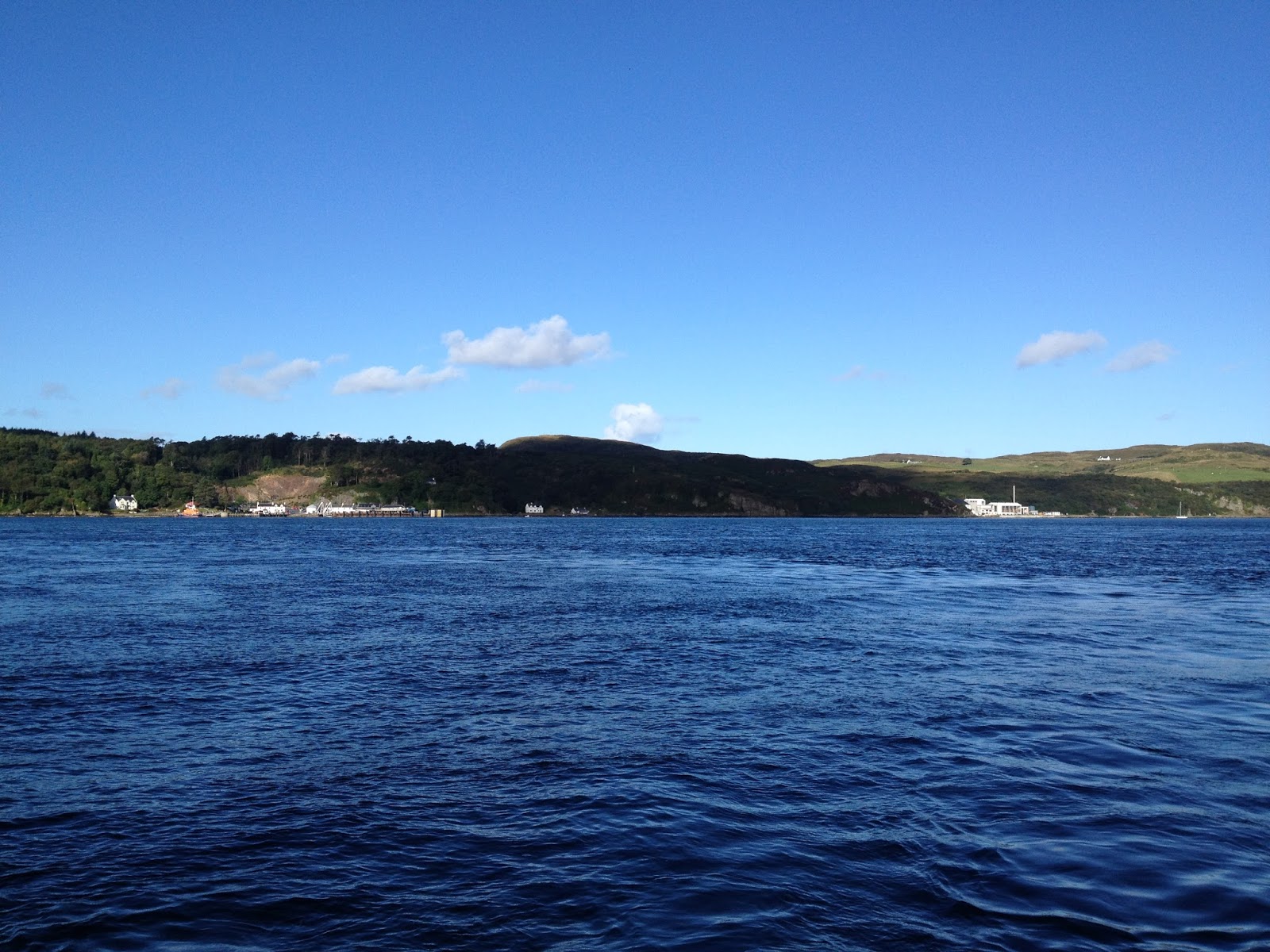
Port Askaig on the left, Caol Ila is visible on the right
The ferry finally made its way back across the water and I was finally able to get on. It was a quick trip to Port Askaig, but I had lost a critical hour. So I had a new decision to make - stay in Port Askaig so I could eat or push on to Bunnahabhain for my scheduled tour? Being the stubborn sort and because the Manager's Tours are only offered once a week, I ended up going with the latter.

The climb out of Port Askaig was a bit rough on an almost empty stomach, as was the rolling route to Bunnahabhain. Thankfully it was only a few miles, so it didn't take too long to find myself on the pretty little bay where the distillery is situated.

The dock that used to serve as Bunnahabhain's main connection to the outside world
I managed to arrive just in time for Andrew Brown, the distillery manager, to gather everyone around for the tour.

Mr. Brown has been working at Bunnahabhain since 1988 and slowly risen through the ranks, working in just about all areas of the distillery during the course of his career, becoming manager in 2011. This was good for me as he has a detailed knowledge of the inner workings at Bunnahabhain and how they have changed over time.


Just about everything about Bunnahabhain is big. The distillery was built in 1881 during the late-19th century whisky boom (which also saw the creation of Bruichladdich on the other side of the island) to provide whisky for blends. The site was selected for three things: water, peat, and ease of access. Bunnahabhain gets its water piped in from a spring in the hills above the bay, which means that, unlike most other distilleries on Islay, its water is not particularly peaty. However, from its creation in 1881 until 1963, it produced all peated whisky, in keeping with its focus on providing malt whisky for blends. At that point there was a radical change - peat was out, unpeated whisky was in. With one exception, Bunnahabhain produced exclusively unpeated whisky for 40 years. Last, but not least, Bunnahabhain's location was picked for ease of access. It is located on a very pretty bay just north of Caol Ila (which was built a few decades before), which meant that it was very easy to bring in malt and caol, then take out malt whisky. Andrew explained to us how malt used to be delivered by puffers - small ships that plied the Hebrides. Malt, 500 tons per boat, would essentially be hoovered out of the holds and into the distillery's malt barns. The puffer fleet folded in 1993 when subsidies were removed and they were unable to compete with the roll-on ferries that were by then servicing the islands. This has had the effect of turning one of Bunnahabhain's original assets into something of a liability, as large trucks now have to navigate the narrow, steep, and twisty roads down to the distillery - much to the locals' chagrin as it has the effect of wearing down the roads very quickly.


Bunnahabhain is first and foremost a distillery for blends - this means that everything is done on a huge scale and with an eye towards efficiency. They crank out 2.1 million liters per year, which isn't even running the distillery at its full capacity. The distillery consumes 300,000 liters of water a day, both that which goes into the whisky and for cooling the wort and condensers. There is space for 900 tons of malt in their barns, which is necessary because deliveries can be delayed by weather and the distillery consumes an average of 160 tons per week. The distillery now produces both peated and unpeated spirit, with a roughly 20:80 split. The experimental run of 38 PPM peated spirit in 1997, the first since the distillery switched over to unpeated malt in 1963, was revisited after the distillery was purchased by Burn Stewart in 2003 and use of peated malt has expanded since then. As a side note, I was told that, contrary to what I have read elsewhere, there was no peated malt produced in 1992. So any independent bottlings of Bunnahabhain from 1992 with a distinctive peat flavor was not something that came from the distillery itself - some of their spirit may have been racked into casks that previously held peated whisky.

The distillery's malt is ground differently than others I saw, with a higher proportion of husk and less grist and flour. Husks help to strain the mash, filtering out the residual grist and flour, which should help to produce a cleaner wort after mashing. They use 12.5 tons of barley per mash, running four waters of increasing temperature over the course of 12 hours, recycling the third and fourth waters to become the next first and second - one way in which the distillery seeks to increase efficiency. There are ten mashes run per week, stopping every fifth to clean out the tun.


Bunnahabhain, like Bruichladdich and Springbank, used to have a cast iron mash tun. However, it cracked some years ago and had to be replaced with a stainless steel tun. The copper top, however, is original. Andrew told us a story about the new tun - the bottom plates from the old tun were used in the new tun. However, they didn't fit properly, which left a two inch gap. The distillery staff complained to the head office for years that it was going to cause trouble someday, but they were ignored until one day the rake caught in the gap and ripped it up. So what could have been an easy fix turned into an expensive problem, shutting down production for a significant amount of time. Just goes to show that when you're in a capital and time-dependent business, it doesn't pay to ignore the little things.

After leaving the mash tun, the wort is piped to the underback to settle, then on to the wort chiller, where it is cooled to 2º C less than the optimum temperature for fermentation, to allow the liquid to have some capacity to absorb the heat that will be generated by the yeast.

The underback, with wort from peated malt - the liquid was almost black
The wort chiller, basically a large radiator that is run on the same spring water used in the rest of the distillery
The wort is piped to the distillery's six Oregon pine wash backs. Each has a capacity of 62,500 liters and is filled ~2/3 full. M and MH strain yeast is added to the unpeated wort, which is fermented from anywhere between 48 hours on weekdays to 110 hours over the weekend, producing wash a 7.5-8% ABV. The wash backs are filled and drained on a 12 hour rotation, to allow for time to wash them thoroughly in between every other fill.


The wash backs are about 15-20 feet tall, with a false floor most of the way up. Andrew mentioned that this wasn't always the case - years ago one could only move around at ground level. This was hazardous because of the huge quantities of carbon dioxide given off during fermentation and the lack of good ventilation. Carbon dioxide is heavier than air and tends to settle near the ground, which meant that anyone entering the room had to get in and out before they ran out of breath. At least one person died because they spent too long inside. This is also why falling into one of the wash backs was almost a guarantee of death - while it might be possible to tread water in the wash, the carbon dioxide would quickly lead to asphyxiation. Thankfully health and safety standards are much higher now, so the carbon dioxide is mostly vented outside.

The wash stills are the tallest on the island and some of the tallest in Scotland, at a towering 25 feet, 10 inches tall. The pear shape is reminiscent of the stills at Lagavulin, but the lyne arms are flat, so the shape is relatively neutral in comparison to some of the wilder stills on the island. The height will give a lot of reflux, but there are no other tricks to increase copper contact. Each wash back has enough liquid in it for four charges of each wash still, which is filled to about half its 35k liter capacity (the largest on Islay). The wash is piped in and allowed 10 to 40 minutes to settled (more time for shorter fermentations, less for longer ones), then heated to 92.5º C for 3.5 hours. The wash stills are currently being run a bit harder to get them in sync with the wash backs - another example of hour much efficiency is prized in the distillery. Everything is run with an eye towards creating the minimum amount of down time.

For some reason they look like spaceships to me
The low wines are then piped over to the spirit stills, which are a fair bit shorter at 20 feet, 10 inches tall. The spirit still is run more slowly, taking five and a half hours to do a single run. They generally do ten runs, then let the still rest for eight hours, which lets the copper reoxidize so that it can more effectively remove sulfur compounds from the spirit. Each still is filled to 60% of its 15,546 liter capacity, which should help to increase copper contact. The foreshots are relatively short, going from between 10-30 minutes, which removes the toxic compounds while keeping some of the lighter fruity and floral esters that Bunnahabhain's unpeated whisky is known for. The stillman knows he has hit the hearts largely by the rate of flow, about 30-50 liters per minute. When the spirit gets down to 62.5% ABV, the flow is switched over to feints and run down.


The computer system used to monitor and control distillation
Once again in keeping with their focus on efficiency, the whole distillation process can be controlled from a single computer in the still room. This not only keeps track of what is going on from moment to moment, but also records previous runs so that consistency can be maintained and any deviations from the norm spotted. While there are certainly some advantages to doing things in a traditional, i.e. uncomputerized, fashion, the quality of the spirit coming out of Bunnahabhain these days it top-notch, so I can't say that their single malts suffer.

The new make spirit is proofed down to a standard 62.5% for filling into casks. While most of Bunnahabhain's spirit goes into first and second fill ex-bourbon barrels, about 10% go into first and second fill ex-sherry casks, alongside a smaller array of other casks like ex-port pipes.


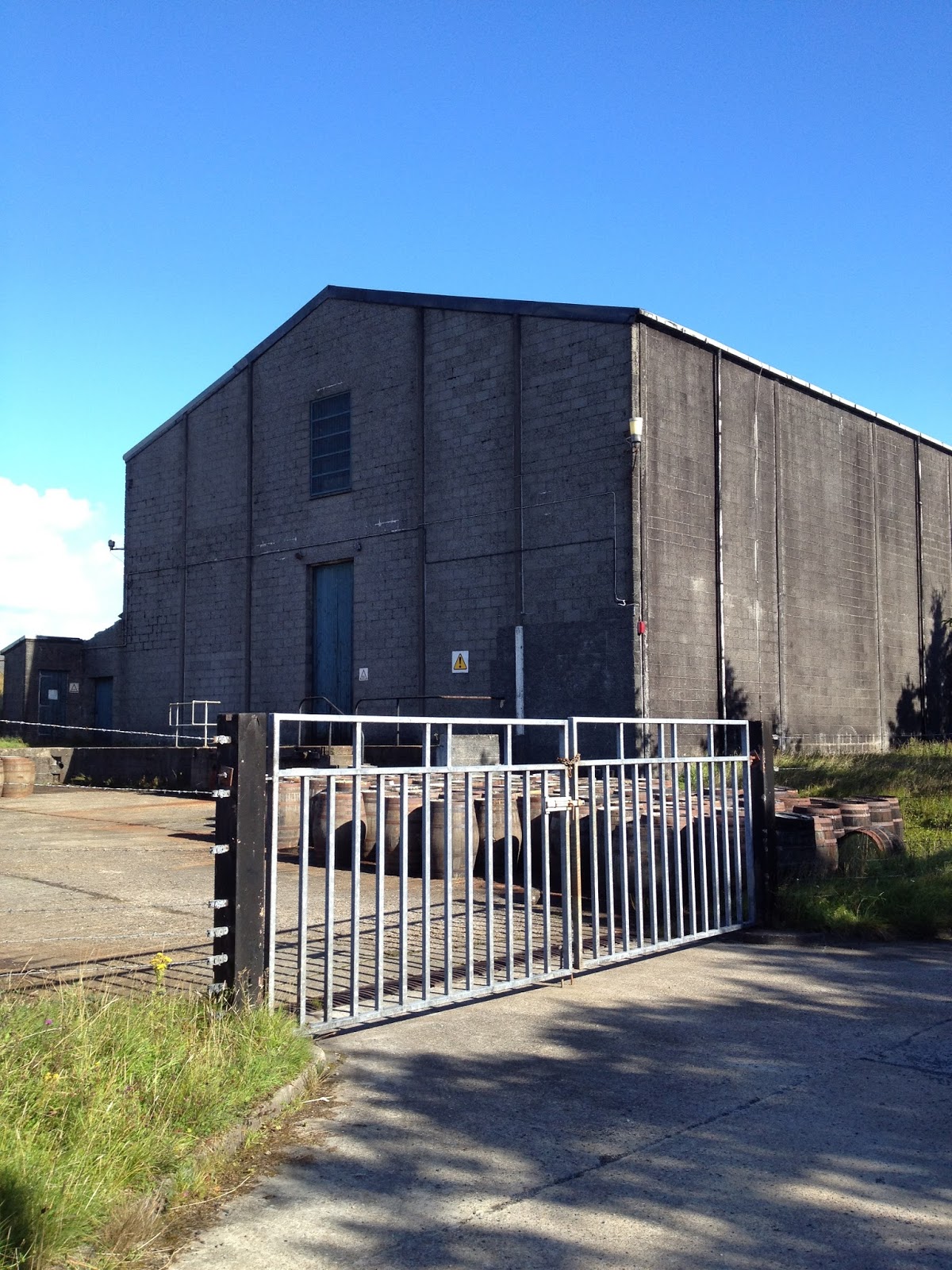
Bunnahabhain has a mix of traditional dunnage and newer rack warehouses on site. While they primarily store their own spirit, there are also a fairly large number of casks from Tobermory, another distillery in the Burn Stewart portfolio that has very little of its own warehouse space.

The tour ended with a tasting of a Bunnahabhain's core range of whiskies, from their new NAS bottlings (Darach Ur and Toiteach) to the 12, 18, and 25 Year. Between being hungry and the lingering effects of being sick, I didn't get as much out of it as I would have liked, but it was still enlightening.


Fish swimming below the distillery pier

After poking around the distillery for a bit - and getting eaten alive by the midges on the stairs to the visitor's center - I finally got back on my bike for the ride to Ballygrant. Between the steep, narrow roads and the lack of blood sugar, it was somewhat hard going, but the gorgeous landscape helped to balance it out.

The Paps of Jura


After getting back to my room, I basically had an early dinner and crashed. It had been a long day, but thankfully the next one would be a lot quieter.

Tuesday, February 26, 2013

Whisky Review: Murray McDavid 1997/2010 Bunnahabhain Chateau Lafite Finish

As I mentioned in my review of Bunnahabhain 12 Year, the distillery did a run of 38 PPM heavily peated malt back in 1997. After slumbering for about a dozen years in an ex-bourbon barrel, Mark Reyner's independent bottling company Murray McDavid snapped up a cask and transferred it to an ex-wine barrel from Chateau Lafite Rothschild in what they call Additional Cask Enhancement (ACE). With an outrun of 1200 bottles, I'm pretty sure this must be a multicask release (a Bordeaux barrel is usually 225 liters, which is about 375 750 mL bottles of whisky diluted from 57% to 46%).

I'm sad to say that I got one of the last bottles from The Party Source (and I am so, so glad I took a risk on this one), so you're probably out of luck unless you can get it from Mission Liquors.

Murray McDavid 1997/2010 Bunnahabhain

Nose: gentle but insistent vegetal/smoky peat, herbal/floral notes, underlying malt, creamy vanilla, light wine cask influence, raisins, a dry savoriness that is slightly meaty. After adding a few drops of water, the peat loses some of its edge - shifting more towards an herbal/vegetal mode, the malt becomes sweeter and more assertive with less wine influence

Taste: malty sweetness up front, wine/vanilla flavors gain traction across the tongue - bringing some jammy fruit (strawberry?) along, peat and pepper hit mid-palate with with a hefty dose of fudge and coffee beans, some floral notes emerge near the back. After dilution, the peat really settles down, letting the wine cask influence shine with a wine/chocolate/malt trio running throughout, pepper and oak are subdued at the back

Finish: very long - bittersweet peat, coffee beans, pepper, vanilla, and umami/savory notes

This is, in my opinion, a simply magnificent whisky. ACEing gets derided as too often being used to gussy up lousy casks or overwhelming the underlying malt whisky, but this one works out perfectly. The sweet wine cask flavors are a great compliment to the strong peat flavors, which are also mellowed by the ex-bourbon cask vanilla. The quality of the peat is particularly interesting, as it's ashier than, say, Caol Ila or Lagavulin, reminding me much more of Kilchoman Machir Bay. If this is what Kilchoman's whisky is going to taste like after more than a decade under its belt, then I foresee great things for the distillery. In the meantime, I'm going to try to track down more bottlings of 1997 peated Bunnahabhain, because this is easily one of my favorite whiskies right now.

Tuesday, February 19, 2013

Whisky Review: Bunnahabhain 12 Year Old (NCF)

Tucked away in the northeast corner of the island of Islay, Bunnahabhain has been cranking out that rarest sort of Islay whisky - unpeated single malts - since 1883.

View of Bunnahabhain Distillery © Chris Upson
The distillery is just up the road from another remote Islay distillery, Caol Ila. While seemingly inaccessible these days, when they were constructed in the 19th century it was a very reasonable location, as most goods were shipped by water rather than road. Bunnahabhain was built on a nice harbor that is sheltered from the fierce Atlantic winds that buffet the other side of the island, which meant that the distillery could bring in malt and ship out whisky via their own pier. Additionally, the distillery had a good water source in the form of the Margadale spring, which was piped down from the surrounding hills directly to the distillery.

Construction of Bunnahabhain began in 1881 (the same year as another Islay distillery, Bruichladdich) during the late 19th century whisky boom, with production beginning two years later. Founded to provide malt whisky for the burgeoning blended whisky trade, it sought to emulate the success of Caol Ila, which had been built several decades beforehand. Coincidentally, Bunnahabhain also spent most of its first century producing peated malt whisky, with the peat coming from the nearby Margadale Hill. It was only in 1963, during a major expansion of the distillery, that they switched to producing almost exclusively the unpeated malt whisky that they are now known for. Since then there have been experimental runs of 28 PPM malt in 1991 and 38 PPM malt in 1997, with more regular distillation of 38 PPM malt beginning in 2003. That expansion also provided Bunnahabhain with the largest potentially capacity of any distiller on the island. They are currently topped by Caol Ila only because the distillery is not being run at full capacity.

Most recently, Bunnahabhain passed from the ownership of the Edrington group (owners of Macallan and Highland Park) to Burn Stewart (owners of the Tobermory and Deanston scotch whisky distilleries, as well as Angostura bitters, Belvedere vodka and Thomas Hine cognac). The latest owners have brought about some major changes at Bunnahabhain, mostly notably the reformatting of their whiskies to be bottled at at least 46.3% ABV and without chill filtration. This has earned them plaudits from whisky reviewers and helped to raise the profile of the distillery from its former obscurity.

Bunnahabhain 12 Year NCF

Nose: oloroso sherry presence is rich but not overpowering, malted barley, bittersweet fudge and mocha, roasted cacao nibs or coffee beans, walnuts, a hint of woodsmoke, maritime air, fresh fruit esters (pear?). Adding a few drops of water makes the nose a bit more gentle, with a bit of a shift towards the malt component, along with a darker and less sweet sherry note, and something a little bit floral.

Taste: begins with gentle malt sugars, then segues into very rich sherry sweetness - properly balanced, followed by mocha bittersweetness, stewed fruit, and black pepper mid-palate, somewhat astringent oak tannins at the back. After dilution, the mouthfeel becomes a bit thicker with more malt sugars, while the pepper, sherry, and oak retreat a bit, shifting the balance.

Finish: peppery oak, coffee beans, lingering sherry, stewed fruit, malty vanilla.

I've got to say that this has become my new favorite sherry-driven single malt. I originally bought it on a bit of a whim, because I was able to pick up a bottle for the very reasonable price of $45 (it's ~$60 here in Oregon). I'm quite glad that I did, since the contents are just so good. It combines a lot of what I enjoyed about Aberlour 12 with a bit more heft and a distinctly Islay character. Additionally, like Aberlour, I really like what comes out of marrying together bourbon cask and sherry cask matured whiskies, as opposed to a cask finish. The sherry is a strong presence in the final product, but the malt and vanilla from the bourbon cask portion isn't completely obscured, providing a balance that is sometimes lacking in cask finished whiskies. The maritime component also adds some very nice complexity, giving it an edge over the competition.

I have heard others complain about it being too oaky and astringent, but for me that's actually a plus. I really like that the overall profile is bittersweet rather than the overriding sweetness that often comes with sherry. But, you know, your mileage may vary. I will happily be drinking this whisky in all its higher proof, non-chill filtered glory.